

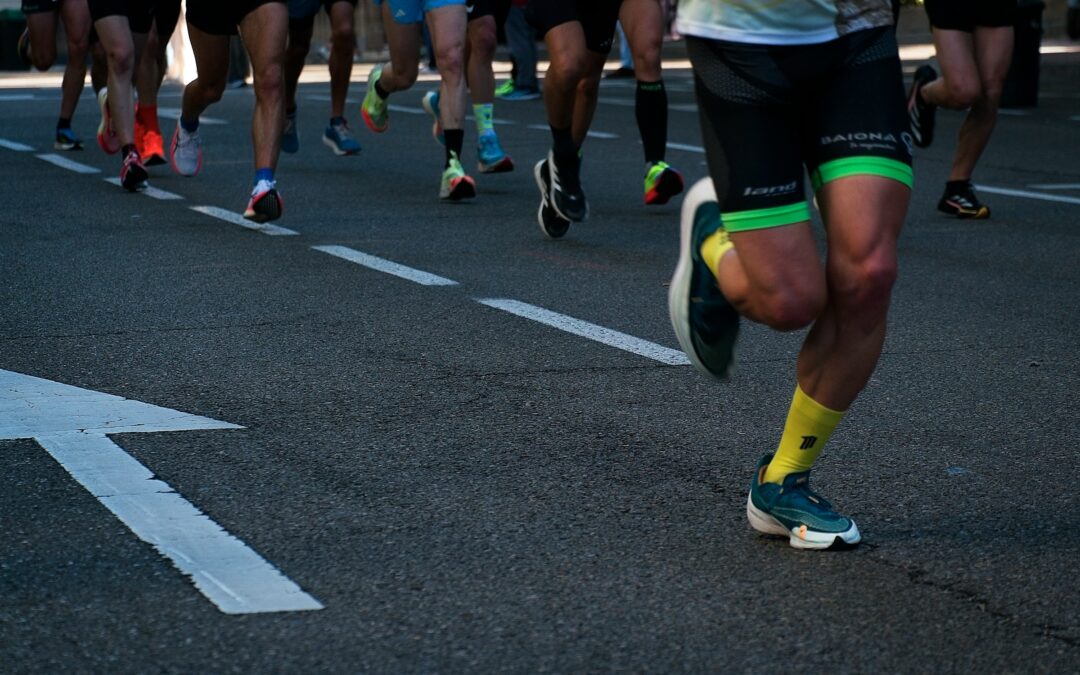
Sicily is not the first place most runners think of when they plan a race abroad. Berlin, London, Valencia and New York dominate the conversation. The island’s reputation rests far more on its food, its archaeology and its coastlines than on its sporting calendar. That, however, is changing. Running races in Sicily are now putting the south-east of the island firmly on the international map. The races here are smaller and more intimate. They are also woven into landscapes that no other European event can match.
You are not running through a generic urban grid. Instead, you are running through UNESCO – listed baroque streets, along walls of honey coloured stone, past olive groves and Norman castles. The light, moreover, is so clear it changes the way you breathe. This guide covers the three races that matter most: the Maratona di Ragusa, the StraRagusa Fast Run and La Filippide Castle. All three are organised in the province of Ragusa. All three take place between summer 2026 and winter 2027. All three, consequently, are worth the flight.
Why are running races in Sicily unlike anywhere else in Europe?
Most European races are designed around logistics. Sicilian races, by contrast, are designed around place. When you run the Baroque Race through Ragusa Ibla, you cross a town that Goethe walked through. It is a place that Montalbano fans recognise from every episode of the television series. It has also been declared a UNESCO World Heritage Site for the coherence of its eighteenth-century reconstruction.
When you run La Filippide from Donnafugata to Punta Secca, you trace a route between a Renaissance castle and the fishing village where Inspector Montalbano lives in fiction. No other race in Italy offers that combination.
South-east Sicily is also one of the few areas of the island where the climate is genuinely runnable for most of the year. Winters are mild. Springs are long. Even summer mornings, before the heat sets in, are perfectly suited to early starts. For those planning a broader trip to the region, our guide to cycling in Sicily covers the same landscapes on two wheels a natural complement to a running focused visit.
The Maratona di Ragusa: the Baroque Race
The Maratona di Ragusa is the flagship event for running races in Sicily. The 2026 edition takes place on 5 July 2026. It offers three distinct distances, designed to welcome both elite marathoners and casual visitors.
What are the three distances?
- Baroque Race – 24 km: the signature distance, winding through the historic centres of Ragusa Superiore and Ragusa Ibla, across the famous staircase connecting the two halves of the city, and into the surrounding countryside;
- Baroque Sprint – 10.2 km: the shorter competitive option, ideal for runners who want to experience the atmosphere without committing to the full distance;
- Walking 10.2 – 24 km: a non-competitive option on the same routes, open to everyone who wants to experience Ragusa on foot.
What makes the Baroque Race special is the route itself. The course passes the Cathedral of San Giorgio. It descends the staircase between Ragusa Superiore and Ragusa Ibla. It runs through streets where almost every building is a listed monument. Few races in Europe offer this density of beauty per kilometre.
Official information, registration details and the updated programme are available on the Maratona di Ragusa. July is one of the most intense months for events on the island. Combining the race with a wider holiday is, therefore, entirely straightforward. Our guide to summer in Sicily covers exactly how to plan the rest of your stay around the heat, the festivals and the coastal escapes.
The StraRagusa Fast Run: why race in Sicily in winter?
The StraRagusa Fast Run is the winter counterpart to the summer Baroque Race. It is scheduled for 17 January 2027. Where the July event is about heat and long Sicilian summer light, the January race reveals the city in its quieter, more local season.
This is when running races in Sicily show a different face entirely. The streets of Ragusa in mid-January are largely empty of tourists. The light is low and golden. The temperature is, furthermore, ideal for racing.
Why does January in Sicily work so well for runners?
- Daytime temperatures sit between 10 and 16 degrees Celsius – close to ideal racing conditions;
- Hotels and restaurants are at their lowest occupancy, meaning more attention and lower rates;
- The post-race food and wine experience (in a region famous for its Cerasuolo di Vittoria and its caciocavallo cheeses) is at its absolute best;
- The city is yours, in a way it simply cannot be in summer.
For those considering a winter trip built around the StraRagusa, our guide to Sicily in winter covers what else to do across the island during the quieter months. From Etna with snow on its summit to the empty baroque towns of the south-east, winter Sicily is consistently underrated.
La Filippide Castle: from Donnafugata to the Casa di Montalbano
Of the three running races in Sicily covered in this guide, La Filippide may be the most evocative. The 2026 edition takes place on 2 August 2026. The race runs from Chiaramonte Gulfi to Donnafugata to Punta Secca, the fishing village known to Italian television audiences as the home of Inspector Montalbano. This is a route that is impossible to imagine anywhere else.
What makes La Filippide Castle so special?
- A point-to-point format from inland hills to coastal village, rare in Italian distance running;
- A route combining rural Sicily, aristocratic architecture and the Mediterranean coast in a single race;
- A finish line on one of the most photographed beaches on the island;
- A genuinely small-scale, community-organised atmosphere unlike anything in mainstream athletics.
You begin in Chiaramonte Gulfi, a hill town at 833 metres above sea level, famous for its olive oil and panoramic views over the south-east of Sicily. The route then crosses open countryside before passing the spectacular Castle of Donnafugata, a nineteenth-century neo-Gothic residence that has hosted royalty, film crews and, most famously, the television crew of Il Commissario Montalbano.
For the full history and visitor information on Donnafugata Castle, provides detailed background on one of the most remarkable buildings in Sicily. The Ragusa tourism portal is also the most comprehensive local reference for the landscapes the route passes through.
The race then finishes on the seafront at Punta Secca, in front of the lighthouse and the famous Casa di Montalbano, the house with the staircase descending directly to the beach. Running here and walking into the sea immediately after is one of the most satisfying race finishes available anywhere in the Mediterranean. Full registration details are available on the La Filippide page.
Practical information for running races in Sicily
Whichever race you choose, the practical logistics follow a similar pattern across all three events.
How do you get there?
- The closest airport is Comiso (CIY), with seasonal connections across Europe;
- Catania (CTA) is the main international gateway, around 90 minutes by road from Ragusa;
- For visitors from North America, our guide to NYC to Catania direct flights covers the new 2026 routes that make Sicily directly reachable from New York.
Getting around
A rental car is strongly recommended for all three races. Start and finish areas are not always central, and the surrounding landscape rewards exploration at your own pace. Our Sicily car rental guide covers exactly what to expect at the airports and how parking works in the historic centres.
Where to stay?
- Ragusa Ibla for the Baroque Race and StraRagusa: small boutique hotels carved out of historic palazzi;
- Marina di Ragusa or Punta Secca for La Filippide, especially if you want to be near the finish line;
- Modica or Scicli as alternative bases, both within thirty minutes by car and both UNESCO World Heritage Sites in their own right.
When should you arrive?
Plan to arrive at least two full days before the race. This allows time to acclimatise to the heat in summer and to the time difference if you are coming from outside Europe. Allow, furthermore, at least three days after the race to explore the region properly.
Building a race trip into a wider Sicily itinerary
The single best decision you can make about running races in Sicily is to refuse to treat it as just a race trip. The south-east of the island is one of the most rewarding parts of Italy to explore. A race is, consequently, the perfect excuse to spend a week or more discovering it properly.
A typical itinerary might combine Ragusa, Modica (with its legendary Modica chocolate) Scicli, Noto and a day trip to Catania and the slopes of Mount Etna. For runners who want to add a serious hike, our hiking Mount Etna guide covers the full trekking routes on the volcano. For those drawn to the ancient world, the Valley of the Temples in Agrigento covers everything you need to plan the visit.
For those who would rather not plan all of this independently, our tailor-made Sicily itinerary service builds a personalised plan around your race date, your fitness goals and your interests beyond running. Our Sicily travel concierge is also available for any questions about active travel planning specifically.
Worth the run
Running races in Sicily are not about chasing a personal best on a flat, fast course. They are about racing through landscapes and cities that have shaped European civilisation for three thousand years. They are about running in a part of the Mediterranean where every kilometre carries a story.
The Maratona di Ragusa, the StraRagusa and La Filippide are not just races. They are, instead, invitations to see the south-east of Sicily from inside on foot, at the pace of your own breathing. That is a rare thing in modern athletics. It is also exactly what makes these events worth the journey. Lace up. Book the flight. Sicily is waiting.
Photo: Unplash