

There are mountains you climb for the view. There are mountains you climb for the challenge. And then there is Mount Etna.
Hiking Mount Etna is something else entirely. This is Europe’s largest and most active volcano. It rises to more than 3,350 metres above the eastern coast of Sicily.
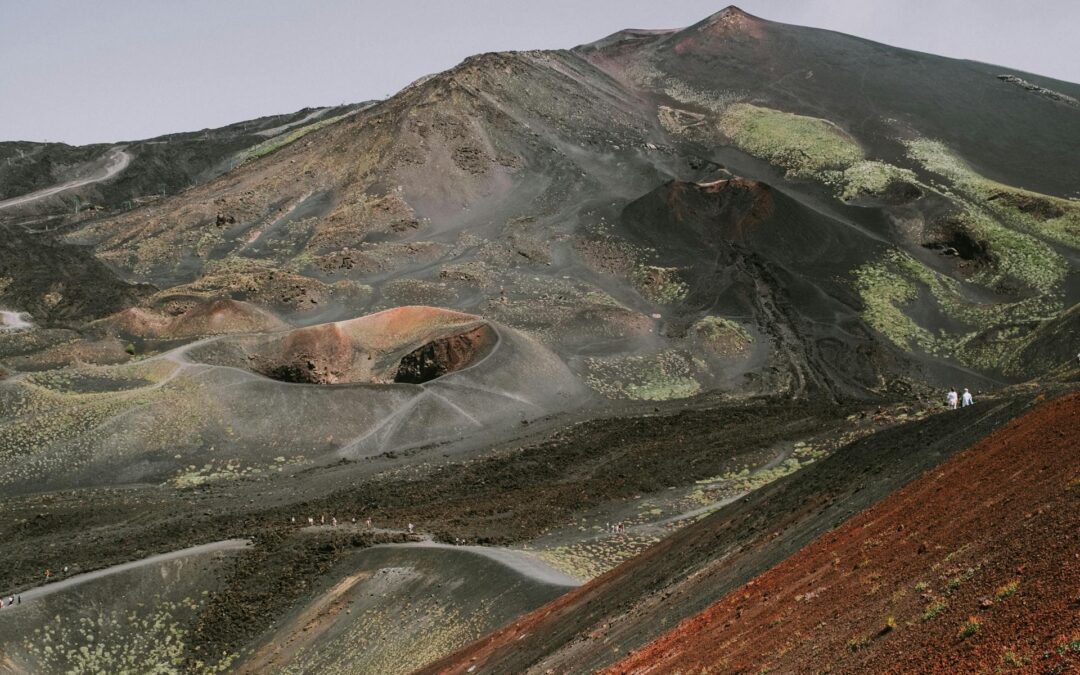
The craters are still steaming. The lava fields stretch for kilometres in every direction. On a clear day, the views extend across the entire island. You can see the Aeolian Islands shimmering on the horizon. The lower slopes are covered in vineyards, pistachio groves and ancient chestnut forests. Even the approach to the mountain is extraordinary.
This guide covers everything you need to know about trekking Etna. It includes the best routes, the right time to go, what to bring and how to make the most of this experience.
Why hike Mount Etna?
Mount Etna is not just a volcano. It is a UNESCO World Heritage Site, inscribed in 2013 for its outstanding universal value as one of the world’s most active and studied volcanoes. It is also one of the most accessible major volcanoes on earth. Catania is less than an hour away. Well-marked trails, professional guides and solid infrastructure make serious trekking possible for a wide range of fitness levels.
However, the real reason to hike Etna is simpler than any of that. It is the feeling of standing on the edge of a living crater. Sulphurous smoke rises into the cold mountain air. Sicily spreads out below you like a map.
According to the Istituto Nazionale di Geofisica e Vulcanologia, Etna is currently one of the most active volcanoes on earth. Significant eruptive activity has been recorded in almost every year of the past decade. This makes it endlessly fascinating and means that the landscape changes constantly, offering something new with every visit.
Mount Etna: essential facts before you hike
Before you set foot on the mountain, it is worth understanding what you are dealing with. Mount Etna rises to 3,357 metres above sea level. This figure changes slightly after each major eruption. New craters form and old ones collapse. It sits on the eastern coast of Sicily, dominating the skyline above Catania and visible from much of the island on a clear day.
The volcano has four active summit craters: the Northeast Crater, the Southeast Crater, the Bocca Nuova and the Voragine. Each behaves differently and activity levels shift constantly. Etna also has more than 300 secondary vents across its flanks. Many of these have produced significant lava flows over the centuries.
The mountain is divided into distinct ecological zones:
- Below 1,000 metres: vineyards, olive groves, citrus orchards and pistachio plantations;
- 1,000 to 2,000 metres: ancient chestnut, oak and beech forests;
- 2,000 to 2,500 metres: alpine vegetation, wildflowers in spring, snow in winter;
- Above 2,500 metres: bare volcanic rock, ash desert, active craters.
Each zone offers a completely different hiking experience, and the contrast between the lush lower slopes and the lunar landscape of the summit is one of the most dramatic transitions in nature anywhere in Europe.
The best hiking routes on Mount Etna
Hiking Mount Etna offers options for every level of experience and fitness. Whether you prefer a relaxed independent walk or a challenging guided ascent, the mountain has a route for you. Here is everything you need to choose the right one.
Independent hiking on Mount Etna: three trails without a guide
If you want to explore Etna independently, three trails on the lower and middle slopes are ideal. All three can be walked without a guide and reward hikers with extraordinary volcanic scenery.
Trail A: Schiena dell’Asino (South flank)
On the southern flank of Etna, the Schiena dell’Asino trail is the most accessible independent hike on the mountain. Well-marked and manageable for most fitness levels, it rewards walkers with a stunning view over the Valle del Bove, the vast volcanic depression that is one of the most dramatic landscapes on the entire mountain. This is the ideal first Etna hike, genuine volcanic scenery without the commitment of a full guided ascent.
Altitude: 1,800 to 2,100 m a.s.l.
Total distance: 5 km
Duration: 3 hours
Difficulty: Easy
Best season: April to November
Trail B: Serracozzo (East flank)
On the eastern flank, the Serracozzo trail offers a sportier alternative for those who want more of a physical challenge while remaining on an independent route. It rewards hikers with extraordinary views over the Valle del Bove from a different perspective, with the added drama of the eastern Sicilian coastline visible in the distance on clear days.
Altitude: 1,740 to 2,250 m a.s.l.
Total distance: 5 km
Duration: 4 hours
Difficulty: Medium
Best season: April to November
Trail C: 2002 eruption area (North flank)
On the northern flank, this short but spectacular trail leads to the 2002 eruption area, one of the most dramatic and recent volcanic landscapes on the mountain. The solidified lava fields and the views over the summit craters make this one of the most visually striking independent hikes on Etna, and at just two hours it fits easily into a half-day visit.
Altitude: 1,800 to 2,100 m a.s.l.
Total distance: 4 km
Duration: 2 hours
Difficulty: Easy
Best season: May to November
Before setting out on any of these trails, always check weather and volcanic activity conditions in advance. Cloud cover on the upper mountain can descend quickly and significantly reduces the experience on all routes. The INGV Etna activity bulletin is the most reliable source for current conditions.
The EtnaWay excursion: what to expect
For those who want to go higher, get closer to the active craters and experience Etna with genuine local expertise, hiring a licensed naturalist guide transforms the day entirely. A guided hike opens up sections of the mountain that are inaccessible independently and brings the volcanic landscape to life in a completely different way.
The excursion we recommend for most visitors is the guided group hike with EtnaWay, a network of experienced naturalist guides offering a wide range of Etna experiences, from trekking tours to Jeep excursions around the volcano.
Excursion description
Together with a group and a naturalist tour guide, you will do a 300-metre ascent and reach the 2002 eruption area, admiring the gorgeous view over the summit craters and the Sicilian coastline from that height. Along the way you will cross lunar landscapes and walk through fabulous ancient forests that somehow survive in the volcanic soil. You will also discover barren craters of lava slag and explore the dark corners of the Etna lava caves, a completely unique geological experience that most visitors to the mountain never find.
This excursion is easily accessible for inexperienced hikers and requires no previous trekking experience. It is the ideal introduction to Etna for those who want a genuine volcanic adventure without the demands of a summit ascent.
Practical information for the EtnaWay excursion
For more challenging experiences, including hikes to the summit craters, Jeep tours around the volcanic flanks and helicopter tours over the active craters, consult the full range of options on the EtnaWay website or enquire directly for customised and exclusive solutions.
Please note: the programme may vary slightly according to weather conditions and volcanic activity on the day.
Guided vs independent hiking on Mount Etna
This is the most important practical question for anyone planning to hike Etna.
Independent hiking is possible on the lower and middle slopes of the mountain. The well-marked trails below 2,500 metres can be walked without a guide by anyone with reasonable fitness and appropriate equipment.
However, above 2,500 metres and on all routes approaching the summit craters, a licensed guide is compulsory. This is not a bureaucratic formality. It is a genuine safety requirement on an active volcano where conditions can change rapidly and routes can be closed at short notice due to eruptive activity.
Licensed Etna guides are members of the Collegio Guide Alpine Sicilia, the official body that regulates mountain guiding in Sicily. Booking through a licensed guide ensures not only safety but also access to areas of the mountain that are otherwise restricted.
For a solo visit to the lower slopes, independent hiking with a good trail map is perfectly reasonable. However, for the summit craters, the Valle del Bove rim or any route above 2,500 metres, a guide is both compulsory and genuinely worthwhile.
What to wear and bring for hiking Mount Etna
Equipment is not optional on Etna. The mountain creates its own weather, and conditions at the summit can be dramatically different from conditions at the base. Even in summer, temperatures at 3,000 metres can drop below freezing with little warning.
Essential clothing
- Sturdy hiking boots with ankle support (the volcanic terrain is rough and unstable);
- Warm layers (a fleece and a windproof outer layer are essential even in summer);
- Gloves and hat (necessary above 2,500 metres in any season);
- Sun protection (the UV intensity at altitude is significantly higher than at sea level);
- Sunglasses (essential on snow and on bright volcanic rock).
Essential equipment
- At least two litres of water per person (there is no water available on the upper mountain);
- High-energy snacks (the ascent is demanding and refuelling is important);
- Headtorch (essential for early morning departures or any route that might run late);
- Trail map or GPS (the upper mountain can become disorienting in cloud or wind);
- Dust mask or buff (volcanic ash and sulphur fumes can be significant near the craters).
The best time to hike Mount Etna
Hiking Mount Etna is possible year-round, but the experience varies dramatically by season.
Summer (June to September)
The most popular season for Etna trekking. The summit routes are generally accessible, the weather is stable and the days are long. However, July and August bring the largest crowds to the cable car and main tourist areas. June and September offer better conditions with fewer people.
Spring (April to May)
In our honest opinion, spring is one of the finest times to hike Etna. The lower slopes are covered in wildflowers, the snow line is retreating from the mid-mountain, and the contrast between spring vegetation and volcanic rock is extraordinarily beautiful. Furthermore, the trails are quiet compared to summer. If you are planning a spring visit, our guide to visiting Sicily in spring explains exactly why this is the island’s best-kept secret.
Autumn (October to November)
Autumn brings dramatic light, mushrooms in the chestnut forests of the lower slopes, and the beginning of the wine harvest in the Etna DOC vineyards. The summit may see early snow in November, but October is generally excellent for hiking.
Winter (December to March)
The upper mountain is covered in snow and the summit craters are generally inaccessible for standard hiking. However, Etna in winter offers extraordinary snowshoeing and cross-country skiing from Piano Provenzana, as well as the unique experience of a volcanic landscape under snow.
Getting to Mount Etna
From Catania
Catania is the natural base for hiking Mount Etna. The city sits at the foot of the volcano, approximately 30 kilometres from the main southern access point at Piano dell’Etna (also known as Rifugio Sapienza). The drive takes approximately 45 minutes.
The Circumetnea railway, a narrow-gauge line that circles the entire base of the volcano, offers one of the most scenic train journeys in Sicily and connects Catania with several towns on the lower slopes including Zafferana Etnea, Bronte and Randazzo. If you are interested in exploring Sicily by public transport, our guide to travelling Sicily by train covers the best routes on the island.
From Taormina
Taormina, approximately 50 kilometres north of Catania, is another popular base for Etna excursions. The drive to the northern access point at Piano Provenzana takes approximately one hour. Many visitors combine a Taormina stay with a day trip to Etna, a combination that represents one of the finest single days available anywhere in Sicily.
By car
Driving is the most flexible way to reach Etna. The southern access road from Catania to Rifugio Sapienza is well-signed and straightforward. The northern access to Piano Provenzana is reached via Linguaglossa. Our Sicily car rental guide covers everything you need to know about driving on the island.
Etna and the food culture of the volcano
One of the most extraordinary aspects of hiking Mount Etna is what awaits you on the lower slopes after the hike. The fertile volcanic soil of Etna produces some of the finest food and wine in Sicily, and a post-hike meal in one of the restaurants or agriturismi of the lower slopes is one of the great pleasures of a day on the mountain.
Etna wines have become one of the most talked-about wine stories in Italy. The ancient Nerello Mascalese grape produces red wines of extraordinary elegance from volcanic terraces at altitude. The whites from Carricante are equally remarkable. A visit to one of the Etna DOC wineries on the lower slopes combines perfectly with a morning hike.
Pistachios from Bronte, grown on the western slopes of the volcano, are among the finest in the world, intensely flavoured, deeply green and used in everything from pasta sauces to gelato. The town of Bronte itself, accessible via the Circumetnea railway, is worth a visit in its own right.
For the full story of how the volcano shapes what Sicilians eat and drink, our complete guide to what to eat in Sicily covers the Etna food universe in detail.
Safety on Mount Etna
Etna is an active volcano. This is what makes it extraordinary, and it is also what makes safety awareness genuinely important.
The INGV Etna observatory monitors the volcano continuously and publishes daily bulletins on activity levels and access restrictions. Before any hiking trip to the upper mountain, it is worth checking current conditions.
Key safety points:
- Always check access restrictions before heading to the summit area (routes can be closed at short notice);
- Never approach active lava flows without professional guidance;
- Be aware of sulphur dioxide emissions near the craters (a dust mask or buff is useful);
- Tell someone your route and expected return time before setting out independently;
- Turn back if conditions deteriorate (weather on the upper mountain can change rapidly).
Furthermore, travel insurance that covers volcanic activity and mountain rescue is strongly recommended for anyone planning to hike above 2,500 metres.
How Time for Sicily can help you
Hiking Mount Etna is an experience that rewards local knowledge. Knowing which guide to book makes all the difference. So does knowing which route suits your fitness level. And knowing which agriturismo on the lower slopes serves the finest post-hike lunch that is what turns a good day into an extraordinary one.
If you are planning an Etna hiking trip as part of a broader Sicily visit, our tailor-made Sicily itinerary service can help you combine the volcano with the baroque towns of the southeast, the beaches of the north coast and the food culture of Catania. For those who want every detail handled, our Sicily experience service covers accommodation, transport, restaurant reservations and constant WhatsApp support throughout your stay.
Final thoughts
Hiking Mount Etna is one of those experiences that is almost impossible to describe to someone who has not done it, and completely impossible to forget once you have.
The steam rising from the craters. The silence of the lava desert at altitude. The moment when the clouds clear and Sicily appears below you, stretched out to every horizon. On the other hand, it is exactly the kind of experience where a planned three-hour walk turns into a full day, and a full day turns into a decision to come back and go higher next time.
Come prepared. Walk slowly. Look into the craters.
You will understand immediately why Mount Etna keeps drawing people back, year after year.
Photo: Pexels