

There are foods that carry history inside them. Modica chocolate is one of them. Produced in the baroque hill town of Modica in southeastern Sicily, this is not chocolate as the rest of the world understands it. No cream, no butter, no lecithin. Just cacao, sugar and, occasionally, spice. The result is grainy, dense and unlike anything else you have ever tasted.
Eating Modica chocolate for the first time is a genuinely surprising experience. The texture dissolves slowly on the tongue, releasing waves of intense cacao flavour followed by the gentle crunch of unmelted sugar crystals. It is ancient, unusual and deeply satisfying. Once understood, it becomes impossible to forget.
What is Modica chocolate?
Modica chocolate is produced using a cold-processing method that dates back to the pre-Columbian civilisations of Mesoamerica. For those planning a trip to Sicily and wanting to make the most of every food experience the island offers, our Sicily trip planning concierge can help build a personalised itinerary around the best food destinations in the region.
The Aztecs prepared a ritual drink called xocoatl by grinding cacao beans with spices and dissolving the paste in cold or tepid water. No heat was applied. No fat was added. The result was a thick, grainy, intensely flavoured preparation that bore almost no resemblance to the smooth, creamy chocolate familiar to modern palates.
Spanish colonisers brought this technique to Sicily in the sixteenth century, during the period of Spanish rule over the island. Modica, already a wealthy and sophisticated city, adopted the method with enthusiasm. While the rest of Europe gradually evolved chocolate production towards the smooth, emulsified bars we know today, Modica preserved the original cold-processing technique almost unchanged.
Today, Modica chocolate holds IGP status (Indicazione Geografica Protetta), recognised by the European Union as a product of specific geographical origin with a protected production method. For a deeper look at the history and heritage of this extraordinary product, the BBC Travel guide to Modica chocolate offers an excellent introduction.
How is Modica chocolate made?
The production process of Modica chocolate is deceptively simple. Understanding it is key to appreciating why the final product is so distinctive.
The cold-processing method
- Cacao paste is worked at a temperature never exceeding 40 degrees Celsius;
- Raw cane sugar is added and mixed into the paste without melting;
- Spices or flavourings are incorporated at this stage if required;
- The mixture is poured into moulds and left to solidify at room temperature;
- No cocoa butter, milk, cream or emulsifiers are ever added.
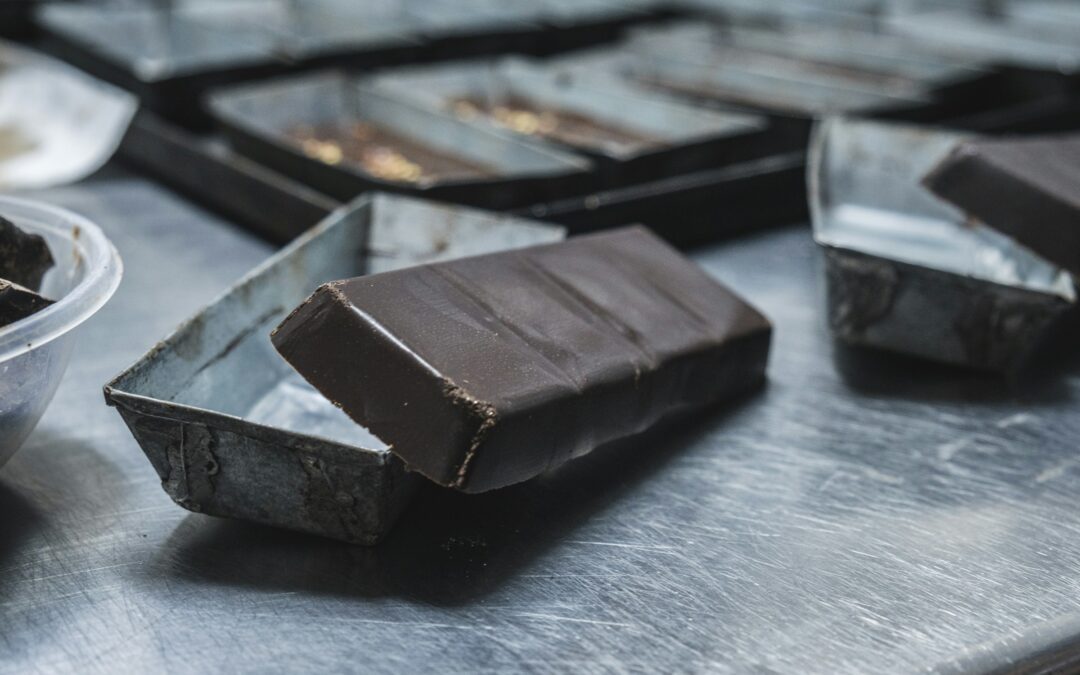
The result of this process is a bar with a characteristic grainy texture, caused by the unmelted sugar crystals suspended throughout the chocolate. When the bar is broken, it snaps cleanly with a sharp crack. On the tongue, it dissolves slowly and unevenly, releasing first the bitterness of the cacao and then the sweetness of the sugar in alternating waves.
Why no fat is added
The absence of added fat is not an oversight. It is the defining characteristic of the method. Without emulsification, the cacao and sugar remain separate at a molecular level, creating the distinctive texture that makes Modica chocolate immediately recognisable. Adding butter or cream would produce a smoother result but would fundamentally alter the character of the product.
What does Modica chocolate taste like?
This is the question most people ask before trying it for the first time. The honest answer is that it tastes like nothing else.
The flavour is intensely focused on cacao. Without the dairy and fat that soften most commercial chocolate, the bitterness of the bean comes through clearly and directly. Sugar provides sweetness but does not smooth or homogenise the experience. Instead, the two elements coexist in a way that feels almost architectural.
The texture is the other revelation. Grainy rather than smooth, it dissolves over time rather than immediately, extending the flavour experience in a way that modern chocolate rarely achieves. Many people find that a single square of quality Modica chocolate is more satisfying than an entire bar of conventional chocolate.
The traditional flavours of Modica chocolate
The original Modica chocolate was flavoured with cinnamon and chilli, reflecting its Aztec origins. Both spices were integral to the pre-Columbian cacao preparations that inspired the Sicilian product.
Over centuries of local production, Modican chocolatiers have expanded the flavour range considerably. Today, the most celebrated varieties include:
- Cinnamon (cannella): The most traditional flavour, warm and aromatic;
- Chilli (peperoncino): The heat builds slowly after the initial cacao hit;
- Vanilla: Subtle and elegant, one of the most popular varieties;
- Carob: A distinctively Sicilian addition, earthy and slightly sweet;
- Sea salt: The salt amplifies the bitterness of the cacao in a remarkable way;
- Orange zest: Bright and citrusy, particularly good in summer;
- Coffee: Rich and intense, a natural pairing with the cacao base;
- Almond: A nod to the broader almond culture of southeastern Sicily.
For a comprehensive guide to the full range of products and producers, the Modica chocolate page covers the IGP specifications and the authorised producers in detail.
Where to buy Modica chocolate: the best chocolatiers
Modica has a remarkable concentration of chocolate producers for a town of its size. The main street, Corso Umberto I, is lined with historic chocolate shops, each with its own distinctive approach to the craft.
1. Antica Dolceria Bonajuto
The oldest chocolate shop in Sicily, Bonajuto has been producing Modica chocolate since 1880. Located at the top of Corso Umberto I, the shop is small, immaculate and intensely atmospheric. The range covers all the classic flavours as well as several seasonal and experimental varieties. Furthermore, the packaging is elegant enough to make Bonajuto chocolate one of the finest gifts you can bring back from Sicily.
2. Rizza
A slightly newer establishment but one with an equally serious approach to the craft, Rizza produces some of the most precisely flavoured Modica chocolate available. The chilli and cinnamon varieties are particularly fine. The shop also produces a range of pastries and confectionery that reflect the broader food culture of the Val di Noto.
Can you buy Modica chocolate online?
Yes. Most of the major producers ship internationally. However, buying in person in Modica is an entirely different experience. The combination of tasting before buying, understanding the production process and eating the chocolate in the context of the baroque town where it was created adds a dimension that no online purchase can replicate.
Modica: the town behind the chocolate
Modica is one of the finest baroque towns in Sicily. Rebuilt almost entirely after the catastrophic earthquake of 1693, it forms part of the Val di Noto UNESCO World Heritage Site, a collection of eight late-baroque towns in southeastern Sicily that represent one of the most coherent architectural achievements of the eighteenth century.
Built across two converging valleys, the upper and lower towns are connected by a dramatic network of staircases and steep streets. At its heart stands the Cathedral of San Giorgio, one of the masterpieces of Sicilian baroque architecture. Rising in tiers above a monumental staircase of 250 steps, the facade is among the most photographed images in Sicily.
For a complete guide to the baroque towns of the Val di Noto and what to see in Modica beyond the chocolate, the Visit Val di Noto guide to Modica covers the architecture, history and food culture of the region in depth.
How to visit Modica: practical information
Getting to Modica
Modica is located in the Province of Ragusa in southeastern Sicily. The most convenient ways to reach it are:
- By car: The most flexible option. Modica is approximately 1.5 hours from Catania and 2.5 hours from Palermo;
- By train: Direct services run from Catania and Syracuse. The journey from Catania takes approximately 2 hours;
- From the United States: Flying into Palermo is one of the most convenient entry points. Our guide to direct flights from New York to Palermo covers the best options for travellers from North America.
When to visit
Modica is a year-round destination. Visiting during the Eurochocolate Modica festival, held annually in the town, transforms the experience entirely. The festival brings producers, demonstrations and tastings to the streets of the historic centre and is one of the finest food events in Sicily.
Avoiding the peak of summer heat in July and August is advisable if possible. Spring and autumn offer the most comfortable conditions for exploring the steep streets of the upper town.
How long to spend
A half-day is enough to visit the main chocolate shops and the Cathedral of San Giorgio. A full day allows you to explore the upper town, visit the Museo del Cioccolato and eat lunch at one of the excellent local restaurants. Staying overnight reveals a quieter, more local version of the town once the day-trippers have left.
Modica chocolate and the broader food culture of Sicily
Modica chocolate does not exist in isolation. It is part of a broader food culture in southeastern Sicily that is among the richest in the entire island. The Val di Noto area produces exceptional olive oil, distinctive cheeses, remarkable pastries and some of the finest street food in Sicily.
Understanding Modica chocolate in this context, as one thread in a much larger tapestry of flavour and history, makes the experience of eating it significantly more rewarding. For those who want to explore the full range of Sicilian food culture, our Palermo street food guide covers the extraordinary food traditions of the island’s capital in detail.
Sicily’s food culture extends well beyond the table. For those interested in exploring the island’s cultural life more broadly, our guide to opera in Sicily covers the theatres and productions that make Sicily one of the most culturally rich destinations in the Mediterranean.
Worth the journey
Modica chocolate is one of those rare food experiences that genuinely changes how you think about a familiar ingredient. Cacao, stripped of everything that modern chocolate production adds to it, reveals a complexity and intensity that is both ancient and entirely contemporary.
Visiting Modica to buy and eat chocolate is one of the finest food experiences Sicily has to offer. The setting makes it exceptional: baroque streets, an extraordinary cathedral and centuries of culinary tradition all in one place. Few things you bring home from Sicily will be more appreciated than a bar of properly made Modica chocolate. It will also be one of the most surprising.
Plan the visit well. Taste before you buy. Allow time for the upper town. For any help building the perfect Sicily itinerary around food, history and culture, our Sicily trip planning concierge is the best place to start.
Photo: Unplash