

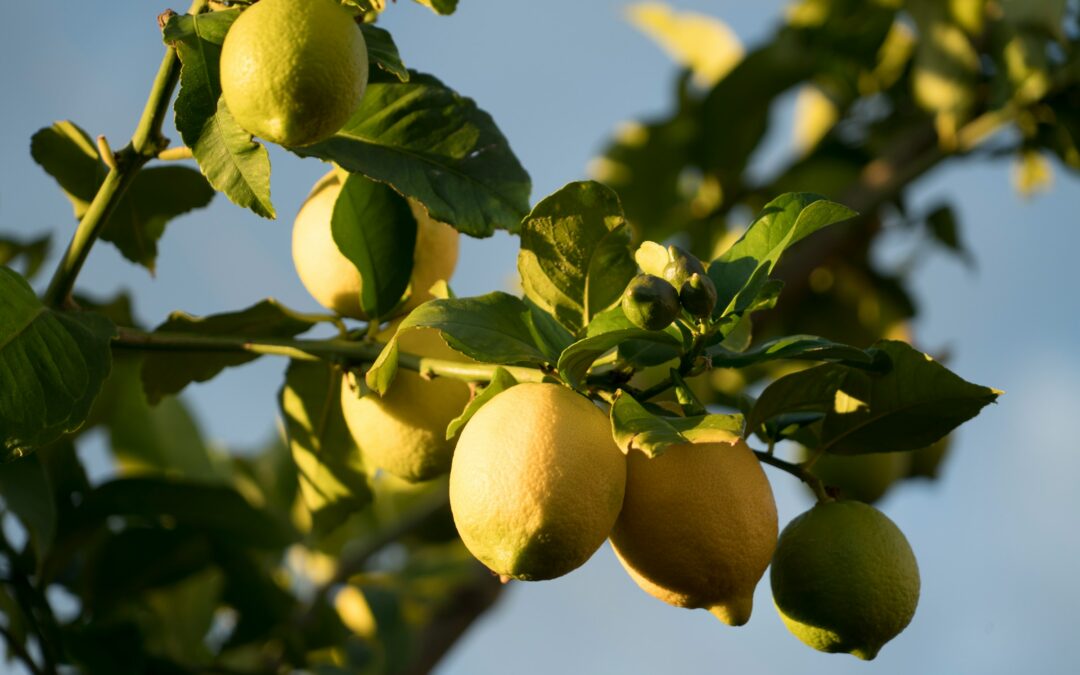
If you have ever squeezed a Sicilian lemon, you already know. Indeed, the colour is deeper. Moreover, the scent is louder. Above all, the juice hits differently. However, not all Sicilian lemons are the same. The ones grown on the eastern slopes of Mount Etna, in the volcanic soil between the volcano and the Ionian Sea, carry something extra. Something mineral, intense and tied to a very specific place. These are the Limone dell’Etna IGP, a European-protected citrus with centuries of history.
In the small town of Giarre, halfway between Etna’s craters and the coast, a young producer named Edoardo Pulvirenti is turning that history into something new. His company, Il Giardino, grows organic lemons, oranges and mandarins on volcanic land and transforms them into artisanal marmalades, chutneys and citrus creams. We met him among the trees of Contrada Rovettazzo to talk about lemons, volcanoes and why a jar of marmalade can carry an entire island inside it.
In truth, the history makes the case on its own. The cultivation of lemons on this coast goes back to the late eighteenth century, when maritime trade from Catania and Riposto carried Sicilian citrus across the Mediterranean. Today, moreover, the IGP designation protects not just the fruit but the farming methods and the landscape behind it. However, statistics only go so far. To understand what makes this fruit special, you need to hear it from someone who grew up among the trees.
What makes the Etna lemon different from any other lemon?
“In truth, everything starts with the soil. We grow on volcanic earth, and volcanic earth is extraordinarily rich in minerals. Then, in addition, you add the position: we are between the volcano and the Ionian Sea, so the trees get the sea breezes, the Levante and the Scirocco winds. As a result, the fruit develops higher acidity, more essential oils and a more intense aroma than lemons grown anywhere else. Indeed, the rind, in particular, is packed with fragrant oils. So that is why chefs and pastry makers across Italy look for our lemons.”
Indeed, the numbers back him up. The Limone dell’Etna earned its IGP status (Indicazione Geografica Protetta) from the European Union in 2020. Key facts about the designation:
- Sixteen municipalities along the Ionian coast, from Catania north to the Alcantara river;
- Two protected varieties: Femminello and Monachello;
- Three seasonal versions: the Primo Fiore in winter, the Bianchetto in spring, the Verdello in summer;
- Hand harvesting only, with scissors, in the morning after the dew has evaporated;
- Fruit available almost year-round thanks to the rotation of varieties.
A family farm between the volcano and the sea
“In truth, the land was always here. The trees were always here. But for a long time the lemons just went to market as fresh fruit. I wanted to show what else they could become, without losing any of the identity. So that is why Il Giardino exists: a line of 100% organic transformed products made entirely from the citrus we grow ourselves. No chemical pesticides. No artificial additives. Just sun, wind, water, volcanic earth and the fruit itself.”
The grove sits in Contrada Rovettazzo, on the outskirts of Giarre. Indeed, it is a working family farm, not a corporate operation. Moreover, the traditional infrastructure has not changed in two centuries:
- The dry-stone walls that terrace the volcanic slope;
- The original irrigation channels;
- The hand-harvesting tradition: every fruit is still cut from the branch with scissors.
The organic products of Il Giardino: marmalades, chutneys and citrus creams
“First, every jar starts with hand-picked seasonal fruit from our grove. Then the processing is artisanal, because the goal is to preserve the character of the raw ingredient, not to hide it. In short, right now we make five things.”
- Lemon marmalade: made from Etna IGP lemons, the signature product. Bright, fragrant and intensely citrus. It works on toast, with cheese or stirred into yogurt;
- Bitter orange marmalade: deeper and more complex, from the Sicilian bitter oranges that grow alongside the lemons. A classic that belongs on every breakfast table;
- Lemon chutney: a savoury-sweet condiment that pairs beautifully with aged cheeses, grilled fish and cured meats. This is where the Etna lemon really shows its range;
- Mandarin chutney: softer and sweeter, made from local mandarins. Excellent with poultry, fresh ricotta or simply on bread;
- Verdello cream: made from the summer Verdello lemon, the most unusual product in the line. Delicate, slightly green and unlike anything you have tasted before.
Naturally, all products are certified organic. They are available through the Il Giardino online shop as single jars or as customisable gift boxes: a six-jar Dispensa box or a twenty-four-jar Degustazione set.
The “forzatura”: the secret behind the summer Verdello lemon
“Honestly, it is the most fascinating thing we do. The forzatura, some people call it the secca, is a technique unique to this area, handed down for generations. For example, in summer we deliberately stop irrigating the trees for a period. The stress forces the tree into a second flowering, and that flowering produces the Verdello: a summer lemon with a greenish skin, delicate flavour and lower acidity.”
“Indeed, the Verdello is special because it should not exist. You stress the tree, the tree responds, and what it gives you is completely different from the winter lemon. Gentler. More floral. It is the lemon most people outside Sicily have never tasted. So that is why our Verdello cream matters so much to me: it captures a flavour you simply cannot find outside eastern Sicily.”
Why small organic producers matter for Sicilian food
“In truth, Sicily’s food identity is built on raw ingredients: the grain, the fish, the olive oil, the citrus. A fresh Etna lemon is extraordinary. However, it lasts a few weeks. A jar of marmalade or chutney made from that same lemon can sit on a shelf in New York or Tokyo and still taste like Sicily. In the end, that is the point. We are not just preserving fruit. We are preserving a place.“
Moreover, he is part of a broader movement. Across the island, small organic farms and family-run producers are finding new ways to bring Sicilian flavour to the world. The Modica chocolate story is a famous example. The Etna lemon is quietly becoming another. For a wider look at the island’s culinary traditions, our guide on what to eat in Sicily covers the essentials.
The lemon in everyday Sicilian life
“For instance, when I was a kid, my grandmother would send me to pick lemons before lunch. Not from the supermarket. From the tree outside the kitchen. After all, that is normal here. The lemon is not exotic. It is the most ordinary, most essential thing. And that is exactly why it deserves to be treated seriously.”
Indeed, the lemon is a rhythm here, not just an ingredient. You find it everywhere in the Sicilian day:
- In the breakfast granita: the lemon granita with brioche is the island’s most iconic morning ritual, and our guide to Sicilian granita and brioche explains why;
- On the fish, squeezed at the table just before eating;
- In the pastry, balancing the sweetness of ricotta and almond;
- In the seltz, limone e sale: the fizzy lemon drink that every bar along the Catania coast still serves on hot afternoons.
Visiting the lemon grove in Giarre: how to plan it
“Yes, and honestly travellers can visit, and I love it when they do. We are just outside Giarre, between the volcano and the sea. You walk among the trees, you smell the blossom, and you understand immediately why this microclimate produces what it does. Better still, if you come during the spring blossom or the summer Verdello harvest, even better.”
Moreover, the visit slots easily into an eastern Sicily itinerary:
- From Taormina: about thirty minutes by car. Our guide to day trips from Taormina covers the area;
- From Catania: about forty minutes;
- Perfect combination: a morning hiking Mount Etna and an afternoon in a citrus grove;
- Best seasons: spring blossom or summer harvest. For timing, check our guide to visiting Sicily in spring.
Where to buy Il Giardino products
“Naturally, everything is on our website. You can buy single jars or build your own box, and we ship across Europe and beyond. And if you want to see the grove through the seasons, follow us on Instagram. That is where the daily life of the farm happens.”
However, if you are visiting eastern Sicily, buying directly from the source is even better. After all, there is something about picking up a jar of Verdello cream ten metres from the tree it came from. It is the kind of souvenir that actually means something.
What is next for Il Giardino?
“Above all, we want more people to know what the Etna lemon really is. Not just a lemon from Sicily, but a lemon from this specific soil, this specific climate, this specific tradition. Naturally, the IGP is helping. The products are helping. But the real goal is for someone in another country to open a jar and taste the volcano.”
In the end, for Edoardo, the future is about widening the circle without losing the roots. Indeed, the grove stays organic. The methods stay artisanal. The fruit stays local. However, the products now reach tables across Europe, and partnerships with chefs and food shops are bringing Etna citrus to places it has never been.
How can Time for Sicily help?
A visit to a working citrus grove is one of those experiences that makes a Sicily trip personal. However, fitting it into an itinerary takes a little local knowledge: the right season, the right route along the eastern coast and the right balance with Etna, Taormina and the sea. That is exactly what we do. We design tailor-made Sicily itineraries that connect you with local producers, food experiences and the authentic side of the island. Book a call with us and we will build your eastern Sicily journey around the places, and the flavours, that matter to you.
A lemon with a story
In truth, not all lemons are created equal. The ones that grow on Etna’s volcanic slopes, hand-picked in a grove between the craters and the Ionian Sea, carry centuries of Sicilian history in their rind. In the hands of a young producer like Edoardo Pulvirenti, that history becomes something you can taste, give and take home.
So next time you are in eastern Sicily, stop in Giarre. Then walk among the trees. Pick up a jar. Squeeze a lemon. The island has no better introduction than the fruit it grows best.
Photo: Unplash