

There are art forms that survive because they are preserved in museums. Then there are art forms that survive because they are alive performed, contested and passed down through families who have dedicated generations to keeping them breathing.
Opera dei Pupi is the second kind. Sicily’s ancient puppet theatre tradition has been practised continuously for over two centuries. In 2001, UNESCO inscribed it on the list of Intangible Cultural Heritage of Humanity not as a curiosity, but as one of the great living theatrical traditions of the Mediterranean world.
This guide covers everything you need to know about Opera dei Pupi: its history, its stories, where to see it performed and what makes it one of the most extraordinary cultural experiences Sicily has to offer.
What is Opera dei Pupi?
Opera dei Pupi (literally, the “opera of the puppets“) is a form of traditional Sicilian theatre using large, elaborately constructed metal-and-wood marionettes known as pupi. Each puppet is controlled by a puppeteer through an iron rod attached to the head, with additional wires for the arms.
The performances are based on the epic cycles of medieval chivalric literature, principally the legends of Charlemagne and the paladins of France, as filtered through Italian Renaissance epic poetry, including Ariosto’s Orlando Furioso and Tasso’s Gerusalemme Liberata. The stories involve knights in armour, Saracen warriors, sorcerers, beautiful noblewomen and battles of extraordinary violence and spectacle.
What makes the Puppets’ Opera remarkable, however, is not simply the subject matter. It is the combination of craft, performance, music, narration and audience participation that turns each show into a genuinely theatrical event. The puppeteers do not hide. The audience shouts. The knights clash with a noise of metal on metal that fills the theatre. It is, in short, nothing like what most people expect when they hear the word “puppet“.
The history of The Puppets’ Opera in Sicily
The Puppets’ Opera emerged as a distinct theatrical form in Sicily in the early nineteenth century, though its roots go considerably deeper. The tradition of narrating the chivalric epics of Charlemagne in public squares (through stories, songs and illustrated panels) had existed in Sicily for centuries before the puppet theatres formalised the art.
By the mid-nineteenth century, travelling puppet companies were performing across the island, in dedicated theatres and in market squares alike. The art form became one of the primary forms of popular entertainment for working-class Sicilian communities, the equivalent, in many ways, of what cinema would become a century later.
The tradition, furthermore, developed two distinct regional schools. The Palermo school produced larger, heavier puppets (up to a metre tall and weighing several kilograms) with a more rigid, frontal performance style. The Catania school, by contrast, used smaller, more agile puppets with a more dynamic movement vocabulary. Both traditions survive to the present day, each jealously maintained by the families who carry them.
The twentieth century brought television and cinema, and Opera dei Pupi lost much of its mass audience. Consequently, many theatres closed. The families that survived did so through a combination of artistic dedication, cultural tourism and, eventually, UNESCO recognition (which arrived in 2001 and transformed the visibility of the tradition internationally).
The stories: knights, battles and Saracen warriors
The central narrative cycle of the Puppets’ Opera draws on the legends of Charlemagne and his twelve paladins, the warrior knights who defend Christian Europe against the Saracen armies in the epic tradition of medieval literature. The main characters include:
- Orlando (Roland): the greatest of the paladins, brave to the point of madness, whose love for the Saracen princess Angelica drives the central drama of Ariosto’s Orlando Furioso;
- Rinaldo: Orlando’s rival and cousin, equally brave but more calculating;
- Angelica: the Saracen princess whose beauty sets the paladins against each other and against reason;
- Gano di Maganza: the treacherous knight whose betrayals drive many of the most dramatic episodes;
- Ruggiero and Bradamante: the Saracen warrior and Christian knight whose love story crosses the battle lines.
A single Opera dei Pupi season can run for months, with each performance covering one episode in a larger narrative arc. Regular audience members follow the story across dozens of evenings. New visitors can attend a single performance and follow the action through the spectacle and the puppeteers’ narration.
The battles are the emotional heart of each show. When two knights fight, the metal puppets clash with a sound that reverberates through the theatre. Heads are severed. Arms are lost. Horses rear. The crowd reacts. It is, consequently, theatre at its most physical and immediate.
The craft: how are the pupi made?
Each pupo is a work of craft that takes months to complete. The construction of a single knight requires skills that span metalwork, woodcarving, textile craft and painting, all traditionally practised within the same family workshop.
The key elements of a traditional pupo:
- The armour: made from hammered and engraved metal, often gilded, representing the heraldic colours and symbols of each knight’s identity;
- The face: carved from wood and painted with individual character, each major figure has a distinctive expression and physiognomy;
- The costume: sewn from fabric appropriate to the character’s rank and origin, with considerable attention to historical detail;
- The weapons: miniature swords, lances and shields, functional enough to produce the clanging sounds that characterise battle scenes.
A major Palermo school pupo can weigh up to eight kilograms. Manipulating one for an entire performance is, therefore, a significant physical feat. The puppeteers train for years before performing the major roles.
For those interested in Sicilian craft traditions more broadly, our guide to Sicilian ceramics covers another living craft tradition that shares the Puppets’ Opera combination of historical depth, family transmission and extraordinary material skill.
Where to see Opera dei Pupi in Sicily
Opera dei Pupi is performed in dedicated theatres across Sicily, principally in Palermo and Catania. Several companies have been operating continuously for generations and offer regular performances to visitors as well as to local audiences.
In Palermo:
- Figli d’Arte Cuticchio: the most celebrated puppet theatre company in Palermo, run by the Cuticchio family across four generations. Mimmo Cuticchio is one of the most important figures in contemporary Opera dei Pupi a performer, director and innovator who has expanded the tradition into contemporary theatre while maintaining its roots. The company performs regularly at the Teatro Cuticchio in central Palermo;
- Museo Internazionale delle Marionette Antonio Pasqualino: the finest collection of traditional puppets in the Mediterranean world, located in Palermo’s historic centre. The museum holds over 4,000 puppets from Sicily and across the globe, with an extraordinary permanent collection of historic pupi from both the Palermo and Catania schools. It also hosts performances and educational events throughout the year.
In Catania:
- Teatro Stabile di Catania occasionally hosts Opera dei Pupi performances as part of its broader programming;
- Several smaller family companies continue to perform in the Catania tradition, maintaining the more agile puppet style characteristic of the eastern school.
For those visiting Palermo and wanting to understand the city’s cultural life in depth, our guide to Palermo street art covers another dimension of the city’s extraordinary visual and performance culture, both traditions share a quality of being embedded in the fabric of daily life rather than preserved at a distance.
The Puppets’ Opera and Sicilian identity
The Puppets’ Opera is more than entertainment. It is a carrier of Sicilian cultural identity, a form through which the island’s communities have, for generations, processed stories of heroism, betrayal, love and death in a language of gesture, colour and sound.
The choice of subject matter is not accidental. The Saracen and Norman world of the chivalric epics mirrors Sicily’s own historical experience, an island that was successively Arab, Norman, Spanish and Italian, that has always lived at the intersection of cultures and that has developed, consequently, its own way of making sense of that complexity. The puppet theatre is, in a very real sense, Sicily telling its own story to itself.
This connection to the island’s deeper historical and literary identity is explored beautifully in our guide to The Lions of Sicily, the novel that has done more than any other recent work to bring Sicily’s complex cultural identity to international attention.
Combining Opera dei Pupi with a Palermo visit
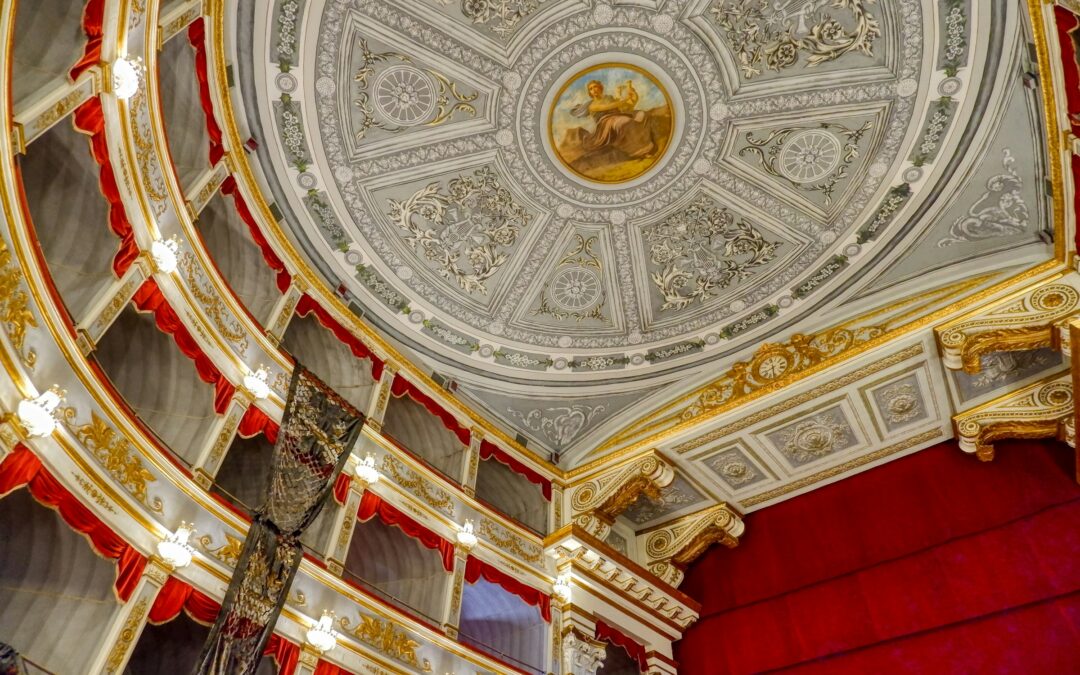
A performance of Opera dei Pupi is one of the finest things to do on an evening in Palermo. It pairs naturally with the city’s other great pleasures street food, baroque architecture and the extraordinary layering of Arab-Norman culture that defines the historic centre.
For those building a broader Sicilian itinerary, Palermo is an ideal base. Our tailor-made Sicily itinerary service can incorporate an Opera dei Pupi performance into a personalised journey that takes in the full range of what the island offers.
For those arriving from North America, moreover, our guide to NYC to Catania direct flights and Palermo New York direct flights cover the most direct options currently available from the United States to Sicily.
Practical information for visitors
Where to book:
- Figli d’Arte Cuticchio, Palermo: check the company’s performance calendar directly for current show dates and times. Performances typically last between one and two hours;
- Museo Internazionale delle Marionette Antonio Pasqualino, Palermo: open Tuesday to Sunday; check the museum website for current opening hours, exhibition information and performance schedules;
- Several companies also offer workshop experiences for visitors who want to understand the craft of puppet construction and manipulation at first hand.
What to expect at a performance:
- Performances are in Italian: some companies offer subtitles or English programme notes for international visitors;
- The atmosphere is participatory: audiences shout, react and respond to the action in a way that bears no resemblance to conventional theatre etiquette;
- Children respond extraordinarily well to Opera dei Pupi: the combination of colour, noise, music and physical action makes it one of the most genuinely family-friendly cultural experiences in Sicily.
For those visiting Sicily in summer and wanting to plan around cultural events and festivals, our guide to summer in Sicily covers the full seasonal picture across the island, including the outdoor performances and festivals that bring Opera dei Pupi into public spaces during the warmer months.
Our Sicily travel concierge can help arrange tickets, recommend the best current companies and incorporate an Opera dei Pupi evening into any Sicilian itinerary.
Worth every curtain call
The Puppets’ Opera is one of those experiences that is impossible to explain properly in advance and equally impossible to forget afterwards. The combination of craft, storytelling, physical performance and audience energy produces something that no other art form quite replicates. Come for the knights. Stay for the battles. Leave understanding something about Sicily that no guidebook, however detailed, can fully convey. The pupi have been telling these stories for over two hundred years. They are, in all likelihood, not planning to stop.
Photo: Unplash