

Palermo is one of those cities that reveals itself slowly. The baroque churches, the Arab-Norman architecture, the street food and the noise are all immediately apparent. The street art, however, requires a different kind of attention. It lives in the side streets, on the crumbling walls of the Kalsa, in the markets of Ballarò and along the edges of neighbourhoods that most visitors walk through without stopping. Stop. Look up. Look sideways. What you find will change how you see the city.
Palermo’s urban art scene is one of the most significant in southern Europe, shaped by the city’s extraordinary layering of cultures, its history of resistance and its ongoing conversation between past and present. This walking guide covers the best areas, the most important murals and everything you need to know to explore it properly on foot.
Why Palermo has one of Italy’s most powerful street art scenes
Palermo’s relationship with street art is not decorative. It is political, cultural and deeply personal. The city has spent decades navigating the aftermath of the Mafia’s grip on public life, the urban decay of the postwar expansion and the gradual, complicated process of reclaiming its own identity. Street art became one of the tools of that reclamation.
Additionally, Palermo’s walls carry the weight of history in a way that few other Italian cities can match. Two thousand years of civilisation have left their mark on every surface. When contemporary artists work on these walls, they are entering into a dialogue with Arab geometric patterns, Norman mosaics and baroque ornamentation that gives the work a resonance it would not have elsewhere. The result is a street art scene that feels earned rather than imposed. Palermo did not import a trend. It grew one from its own soil.
The Kalsa: where Palermo’s street art began
The Kalsa is the oldest and most historically layered neighbourhood in Palermo, originally built as the royal quarter of the Arab emirs in the ninth century. For decades after the Second World War, it was one of the most neglected areas of the city, its medieval buildings left to decay while its population moved to the periphery.
The urban renewal of the Kalsa began in the 1990s and street art was part of that process from the beginning. Today, the neighbourhood contains some of the finest murals in the city, often juxtaposed against architecture of extraordinary beauty.
What to look for in the Kalsa:
- Piazza Magione and the surrounding streets contain several large-scale works that engage directly with the neighbourhood’s Arab and Norman heritage;
- Via dello Spasimo and the area around Lo Spasimo cultural centre host rotating works from both Italian and international artists;
- Via Alloro, one of the most beautiful streets in the neighbourhood, carries everything from formal commissioned murals to spontaneous paste-ups.
Allow at least two hours to walk the Kalsa properly. The streets are narrow and the works are often discovered unexpectedly rather than sought out directly.
Ballarò: street art in the heart of the market
Ballarò is Palermo’s oldest and most chaotic market, running through the Albergheria neighbourhood in the heart of the historic centre. It is also one of the most concentrated areas of street art in the city, where commissioned murals sit alongside market stalls selling everything from spices to secondhand electronics.
The Ballarò Buskers festival and subsequent urban art initiatives have brought significant works to the neighbourhood. Many of them reflect its extraordinary cultural diversity. Ballarò has historically been one of the most immigrant-friendly areas of Palermo. The street art here reflects that mix of Sicilian, African, Asian and Middle Eastern influences. It feels entirely organic. Nothing about it was imposed from outside.
Key works in the Ballarò area:
- Large-scale figurative murals on the walls of the covered market buildings reference the history of the spice and textile trades that have defined the area for centuries;
- Works by Igor Scalisi Palminteri, one of Palermo’s most important contemporary artists, draw on Sicilian folk tradition and transform it into something entirely contemporary;
- Paste-ups and stencil work in the narrow lanes between the market stalls are often ephemeral and always worth looking for.
After exploring the street art, the area around Ballarò is also one of the best places in Palermo to eat. Our guide to the best street food in Palermo covers exactly what to order and where to find it within walking distance of the murals.
The ZEN neighbourhood: peripheral and powerful
ZEN (Northern Expansion Zone) is Palermo’s most notorious peripheral neighbourhood, built in the 1960s and 1970s as a social housing project on the northern edge of the city. It is not on any standard tourist itinerary. Nevertheless, it contains some of the most significant street art in Sicily.
Several large-scale interventions have taken place in ZEN over the past decade. Artists came here drawn precisely by the challenge. Working in a context that the rest of the city had largely written off appealed to them in ways that more central locations could not. The results are murals of considerable ambition and emotional weight. They engage with themes of poverty, dignity and belonging. These are conversations that the more tourist-facing areas of Palermo simply do not need to have.
Visiting ZEN requires a degree of planning and ideally a local guide. The neighbourhood is safe during the day, but navigating it without knowledge of the area is genuinely disorienting. If you want to include it in a deeper exploration of the city, our Sicily travel concierge can help you arrange a guided visit with someone who knows the area well.
Via Maqueda and the historic centre: art in plain sight
Via Maqueda, Palermo’s main commercial street, and the surrounding blocks of the historic centre contain a more visible and accessible layer of street art that rewards the observant walker without requiring any detour from the standard tourist path.
The area around Piazza Rivoluzione, Piazza Ballarò and the back streets of the Capo market all have significant works. Moreover, the walls of the former industrial buildings along the edges of the historic centre carry large-scale murals that are visible from a distance but often overlooked because visitors are looking at the baroque buildings in front of them rather than the painted walls behind.
Notable artists to look for throughout the historic centre:
- Rosk and Loste, the Palermo-based duo whose large black-and-white figurative works have become some of the most recognisable in the city;
- Borondo, the Spanish artist whose works in Palermo are characterised by his use of transparency and layering, giving the impression of figures emerging from or dissolving into the wall surface;
- Alice, the Rome-based artist whose geometric and figurative works appear in several locations across the city.
The I AM SICILIAN festival and organised street art events
Palermo has hosted several organised urban art festivals that have brought significant works to the city and helped establish its reputation on the international street art circuit.
The I AM SICILIAN initiative and various editions of the Ballarò Buskers festival have commissioned works from artists across Europe and beyond. The result is a legacy of murals that now form a permanent part of the city’s visual landscape. Furthermore, the Manifesta 12 contemporary art biennial arrived in Palermo in 2018 and changed things considerably. It brought international attention to the city’s art scene and left behind several permanent and semi-permanent works across the historic centre and beyond.
Checking the programme of Palermo’s cultural calendar before your visit is worthwhile. New works and interventions appear regularly, and the city’s street art scene is genuinely evolving rather than fixed.
Practical information for your street art walk
Best time to walk:
- Early morning, between seven and ten, is the best option for photography, quiet streets and manageable heat;
- Late afternoon from around four o’clock offers softer light and longer shadows that transform many of the murals;
- Avoid midday in summer: the heat in the narrow streets of the Kalsa and Ballarò is intense and the light is flat.
What to bring:
- A charged phone with a map downloaded offline, as many of the best works are in streets that do not appear clearly on standard navigation apps;
- Comfortable shoes without exception: the streets of the Kalsa and Ballarò are cobbled and uneven;
- Cash for the market stalls and the small bars that line the walking routes;
- A wide-angle lens if you are serious about photography, as many large-scale murals require distance to capture properly.
Getting around:
- The Kalsa, Ballarò and the historic centre are all walkable from each other within twenty to thirty minutes;
- The ZEN neighbourhood requires a taxi or a local guide;
- Public buses connect the historic centre to the northern periphery, but navigating ZEN without local knowledge is not recommended.
Palermo beyond the murals
Street art is one lens through which to understand Palermo. The city rewards every kind of looking: at its architecture, its markets, its festivals and its people.
Planning a longer visit to Palermo? Our guide to the Santa Rosalia Festival covers the most important annual celebration in the city. Every July, it transforms the historic centre in ways that mirror what the street art does year-round. For a deeper understanding of the city’s cultural and literary roots, our guide to The Lions of Sicily is the place to start. It is one of the most compelling portraits of Palermo’s complex identity ever written.
Planning a broader Sicilian itinerary around Palermo and beyond is also worth considering. Our tailor-made Sicily itinerary service builds a personalised journey around your interests, timeline and travel style, ensuring that Palermo is the beginning of the story rather than the whole of it.
Worth the detour
Palermo’s street art is not a tourist attraction in the conventional sense. It does not have opening hours, admission fees or audio guides. It exists in the same space as the laundry strung between windows, the smell of frying from the market stalls and the sound of the city going about its business.
That is precisely what makes it worth seeking out. Walking Palermo’s streets with attention to its murals means engaging with the city at a level that most visitors never reach. It is, in the end, one of the most honest ways to understand what Palermo actually is.
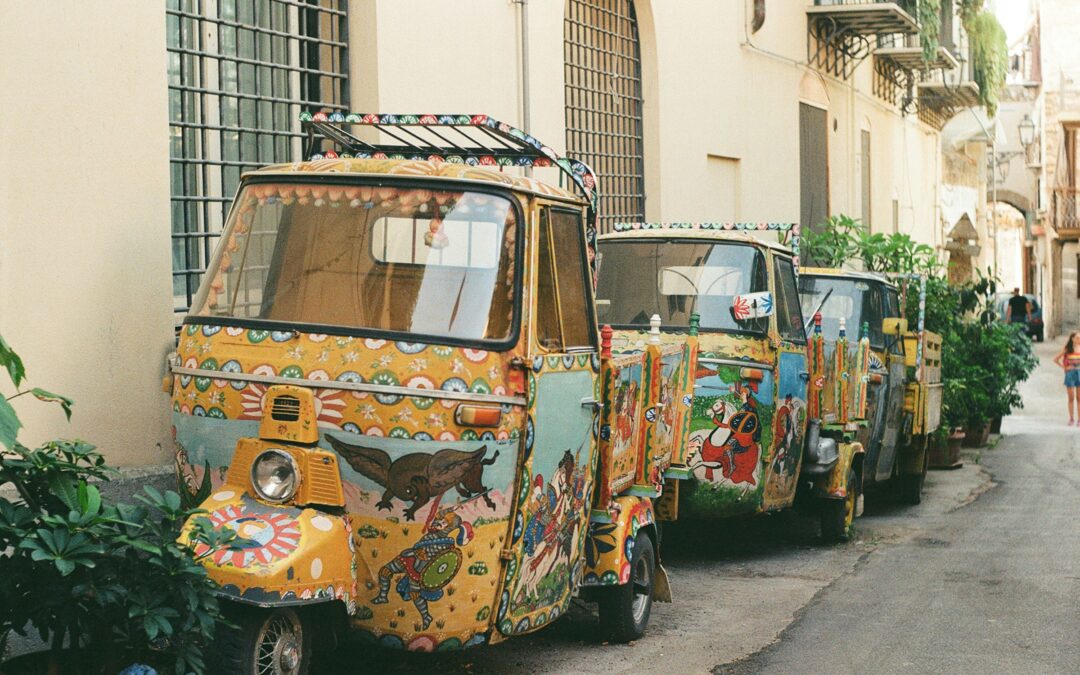
Photo: Unplash