

On 13 December, the small island of Ortigia does something no other Italian city quite matches. A silver statue of Saint Lucy leaves the cathedral, thousands of people follow it through the dark, and many Syracusans give up bread and pasta for the day. This is the Festa di Santa Lucia, the most awaited day of the Syracusan year.
Indeed, most travellers know Saint Lucy from the Swedish festival of lights, or from the devotion to Santa Lucía, protector of eyesight, found across the Catholic world. Fewer know that she was born in Syracuse, and that this is where her feast is celebrated at full volume. This guide explains when it happens, what you will see and what to eat.
Who was Saint Lucy, and why Syracuse?
According to tradition, Lucy was a young woman from a wealthy Syracusan family who gave her possessions to the poor. She was martyred on 13 December 304 under Emperor Diocletian, and she became the patron saint of her home city.
- The name: Lucia comes from the Latin word for light, which explains the festival‘s imagery;
- The symbol: traditional paintings show her holding her eyes on a dish, hence her role as patron of eyesight;
- The old calendar: in the Middle Ages, under the Julian calendar, her feast fell close to the winter solstice, the shortest day of the year;
- The relics: her body is traditionally kept in Venice, though it has returned to Syracuse on a few special occasions.
Naturally, that story is woven into the city’s streets. Our guide to Ortigia shows how much of Syracuse’s history fits inside a single square kilometre, which is exactly why the procession feels so intimate.
For a broader overview of the city she protects, the official Sicilian tourism portal’s Visit Sicily guide to Syracuse lists its ten unmissable attractions. It is a useful starting point before you plan your days around the festival.
When is the Festa di Santa Lucia 2026?
The celebrations start on 9 December and build towards two main days, 13 December and 20 December. In 2026, both dates fall on a Sunday, which usually means bigger crowds.
- 9 December: the official opening, with the handover of the keys to the saint‘s chapel;
- 12 December: the silver statue is moved from its chapel to the cathedral’s main altar;
- 13 December: a solemn Mass in the morning and the great procession in the afternoon;
- 20 December: the Ottava, when the statue returns to the cathedral.
The festival sits between the Immaculate Conception on 8 December and Christmas, so it is easy to combine with the rest of the season. Our guide to Christmas in Sicily covers that wider festive calendar.
For the history behind the feast, the Encyclopaedia Britannica entry on St. Lucia’s Day offers a clear overview. That said, exact times move slightly from year to year, so check the official programme published by the Archdiocese of Syracuse shortly before you travel.
What happens on 13 December?
Above all, the day opens with a solemn Pontifical Mass in the cathedral. Around 3:30 in the afternoon, the silver statue and the relics leave Piazza Duomo and begin a long walk through the city.
- The statue: a silver simulacrum carried on the shoulders of the bearers;
- The escort: twelve cilii, tall wooden candelabra decorated with flowers;
- The carriage: the Carrozza del Senato, followed by a parade in 18th-century costume;
- The devotees: many walk barefoot and carry candles in thanks or in hope of a grace.
The procession ends at the Basilica of Santa Lucia al Sepolcro in the Borgata district, usually around 10:30 at night. Above all, this is a religious event, not a performance, and that is exactly what makes it so moving.
What is the Ottava on 20 December?
Meanwhile, a week later the statue makes the journey back. This second procession, known as the Ottava, follows a different route and stops twice on the way to the cathedral.
- First stop: the Sanctuary of the Madonna delle Lacrime, for a moment of prayer;
- Second stop: the city hospital, where the sick are remembered;
- The firefighters: in recent years they have taken over carrying the statue along Corso Gelone;
- The start: the procession leaves Piazza Santa Lucia in the afternoon.
However, in a year when 20 December falls on a weekday, it is not a public holiday, so the crowds are smaller. In 2026 it falls on a Sunday, so expect it to be busy.
Why does Saint Lucy matter beyond Syracuse?
Indeed, the feast is not only a local affair. Both the Catholic and the Orthodox churches honour Saint Lucy on 13 December, and her story has travelled far from the island.
- Sweden: Lucia is celebrated with a procession of white-robed singers wearing crowns of candles;
- The old link: a Swedish Lucia was historically invited to take part in the Syracuse festival;
- The emigrants: delegations of Syracusans living abroad return for the procession;
In short, standing in Piazza Duomo means joining a tradition with global echoes. That is part of why the evening feels so charged.
What is cuccìa, and why do Sicilians skip bread and pasta?
On Saint Lucy’s Day, many Sicilians give up bread and pasta and eat wheat and rice instead. The signature dish is cuccìa, a bowl of boiled wheat berries with sweet ricotta, honey, cinnamon and candied fruit, sometimes finished with chocolate. Recipes vary from family to family, and some versions are savoury.
In fact, according to tradition, the custom commemorates a famine that ended on the saint’s day, when ships loaded with grain reached the harbour. The grain was cooked whole, which is why cuccìa, made of boiled wheat berries, became the dish of 13 December.
- Arancine: fried rice balls that replace bread for many people;
- Panelle: crisp chickpea fritters, a classic street snack;
- Risotto and timballi: baked and creamy rice dishes on family tables;
- Legumes: allowed and very common, since they are neither bread nor pasta.
Our guide to what to eat in Sicily explains how these dishes fit into the island’s food calendar. Naturally, the day is no penance, because the menu is rich, sweet and very generous.
Where can you see Caravaggio’s Burial of Saint Lucy?
Naturally, art lovers have a second reason to visit. In 1608, Caravaggio painted the Burial of Saint Lucy in Syracuse, shortly after escaping from prison in Malta. It was made for the Basilica of Santa Lucia al Sepolcro, built where the saint is traditionally believed to be buried.
After years in other locations, the original returned to the basilica in December 2020 and hangs there today. A facsimile fills its place in the Chiesa di Santa Lucia alla Badia on Ortigia’s Piazza Duomo.
Traveller reviews on Tripadvisor for the Basilica of Santa Lucia al Sepolcro and the Church of Santa Lucia alla Badia are useful for current details. Indeed, both churches are worth a look, since each tells a different part of the story.
- Free entry: visitors report that the basilica is free to enter;
- The lighting: some reviewers mention a coin-operated light for the painting;
- The style: dramatic chiaroscuro, so allow your eyes to adjust to the gloom;
- The setting: the basilica sits in the Borgata, away from the busiest tourist streets.
Where is the best place to watch the procession?
In truth, the route changes slightly with each year’s programme, but a few places are reliable. Arrive early, because the streets fill well before the statue appears.
- Piazza Duomo: the departure, with the thickest crowd and the strongest atmosphere;
- The seafront: recent routes have passed along the Passeggio Aretusa, with the sea on one side;
- The Borgata: the arrival at Piazza Santa Lucia, late at night, is the most emotional moment;
That said, patience is part of the experience. The statue moves slowly, with long pauses, so dress warmly and bring something to eat.
What else is there to see in Syracuse in December?
Naturally, the festival is only part of the story. Ortigia is the oldest part of Syracuse, a tiny island joined to the mainland by two bridges. The Visit Sicily page for Ortigia describes it as a small jewel suspended between the sea and history.
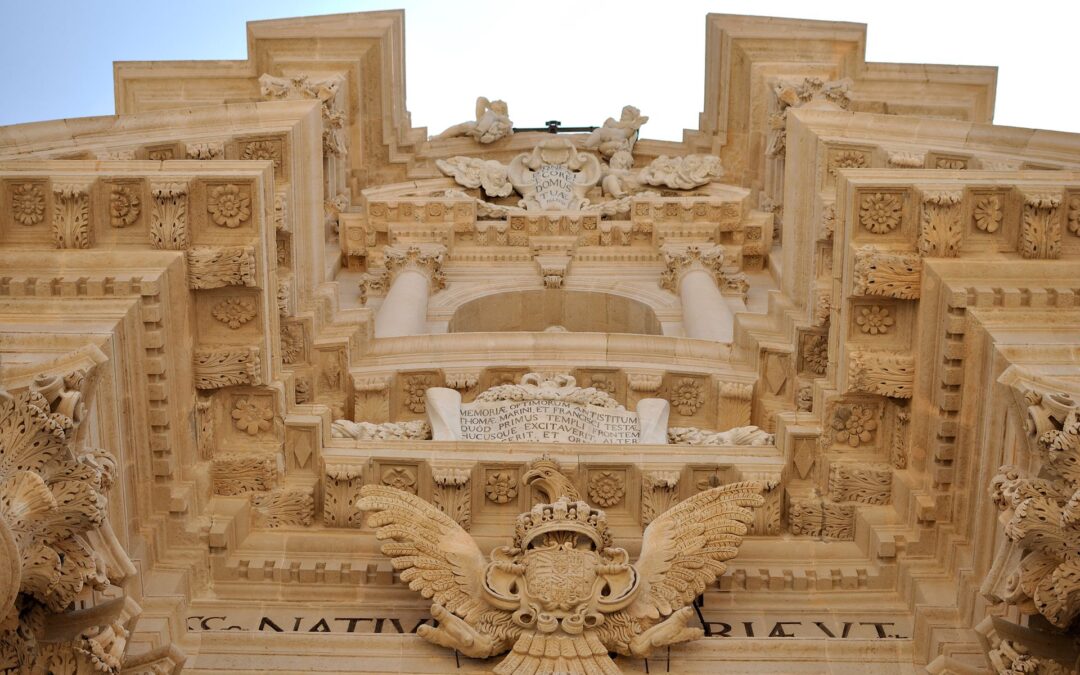
- The cathedral: built incorporating the columns of the Doric temple of Athena;
- The Temple of Apollo: the remains of an ancient Greek temple on the island;
- The Arethusa Spring: a freshwater pool right beside the sea;
- Maniace Castle: the Swabian fortress at the very tip of Ortigia.
For a ready-made route, the two-day walking itinerary follows the Greek monuments step by step. It is ideal for the quieter days around the festival.
Is December a good time to visit Syracuse?
In truth, it is a lovely time, with a calm, almost off-season feel outside the festival days. The city is compact, so most of what you want to see is close together.
- Mild days: comfortable for walking, though evenings turn cool;
- Fewer visitors: the summer crowds are gone, apart from the festival days;
- Short days: sunset comes early, so plan outdoor sights for the morning.
How do you get to Syracuse?
In practice, the nearest major airport is Catania, roughly an hour from Syracuse by road. From there, you can reach the city by car, or by regional train or bus.
Our guide to Delta’s year-round flights to Catania covers the simplest route from the United States. Indeed, once you land, Ortigia itself is small enough to cover entirely on foot.
Can you visit Santa Lucia as a day trip?
In practice, it is possible, but it is not ideal. Syracuse is easy to reach from Catania in a day, yet the great procession runs until late at night.
- The timing problem: the statue arrives at the basilica around 10:30 pm, so plan your way back in advance;
- The better plan: sleep in Ortigia so you can enjoy the whole day on foot;
- The compromise: arrive by early afternoon, watch the departure and leave before the finale;
- The alternative: choose the Ottava on 20 December, which is calmer.
Practical tips for the Festa di Santa Lucia
In fact, a little preparation makes the day far easier. Most problems come from crowds and closures.
- 13 December is a local holiday: many shops and offices close in Syracuse;
- Book accommodation early: hotels in Ortigia fill up around the festival dates;
- Dress warmly: the procession lasts for hours and the evening air is cool;
- Be respectful: this is a religious celebration, so photograph with care.
How does it fit into the Christmas season?
Naturally, Santa Lucia falls in the heart of the pre-Christmas season, between the Immaculate Conception and Christmas Eve. Many travellers stay on, because the island moves from one celebration to the next almost without pause.
Beyond the feast itself, Christmas brings processions, nativity scenes and festive baking across the island. For the countdown, our guide to New Year’s Eve in Sicily compares the best towns for fireworks and concerts.
If you plan a longer winter stay, our guide to Sicily in winter explains what else the island offers. Meanwhile, the nearby towns of the Sicilian baroque south-east make easy day trips from Syracuse.
Follow the light to Syracuse
Naturally, hotels fill up, procession times shift and the best viewpoints need a little local knowledge. We help travellers build a December trip around the dates that matter. Book a free call with our Sicily trip planning concierge, and let us plan it with you.
In the end, few festivals still feel this personal, with a whole city carrying its patron through the night. Come for the silver statue and the candles. Stay for a bowl of cuccìa, and a December unlike any other in Italy.
Photo: Pexels