

In recent days, news about a Sicily landslide in Niscemi, a town in southern Sicily, has circulated widely in international media. Images of cracked roads and evacuated homes are striking, and for travelers planning a trip to Sicily in 2026, questions are understandable.
This article explains what is happening, why it happened, and — most importantly — why the situation is localized and does not affect travel across Sicily. It also explains how visitors can continue to travel safely, responsibly, and even support the island simply by being there.
What is happening around Sicily landslide in Niscemi
Niscemi, a town located inland in the province of Caltanissetta, has been affected by a significant landslide that forced authorities to evacuate several neighborhoods as a precaution. The movement of the ground damaged roads and buildings, making parts of the town temporarily unsafe for residents.
Local and national civil protection authorities acted quickly, setting up restricted zones, relocating affected families, and monitoring the terrain. While the images are dramatic, it is important to understand that this is a localized geological event, not a widespread emergency across Sicily.
Sicily landslide and the link with Cyclone Harry
The Sicily landslide in Niscemi occurred after the intense weather events caused by Cyclone Harry, which hit Sicily on Tuesday, January 20, 2026. As explained in our previous article on Cyclone Harry, the storm brought exceptional rainfall and unusually powerful sea activity to parts of the island.
In Niscemi’s case, prolonged rainfall saturated the soil, accelerating ground instability that had already existed beneath the surface. This connection makes it possible to understand the landslide as part of a broader sequence of extreme weather events — not an isolated or mysterious occurrence.
(You can read our detailed account of Cyclone Harry and the extraordinary response of Sicilians in our dedicated article.)
Not just bad weather: Historical and geological reasons for this Sicily landslide
It is important to be clear: this landslide is not caused by bad weather alone.
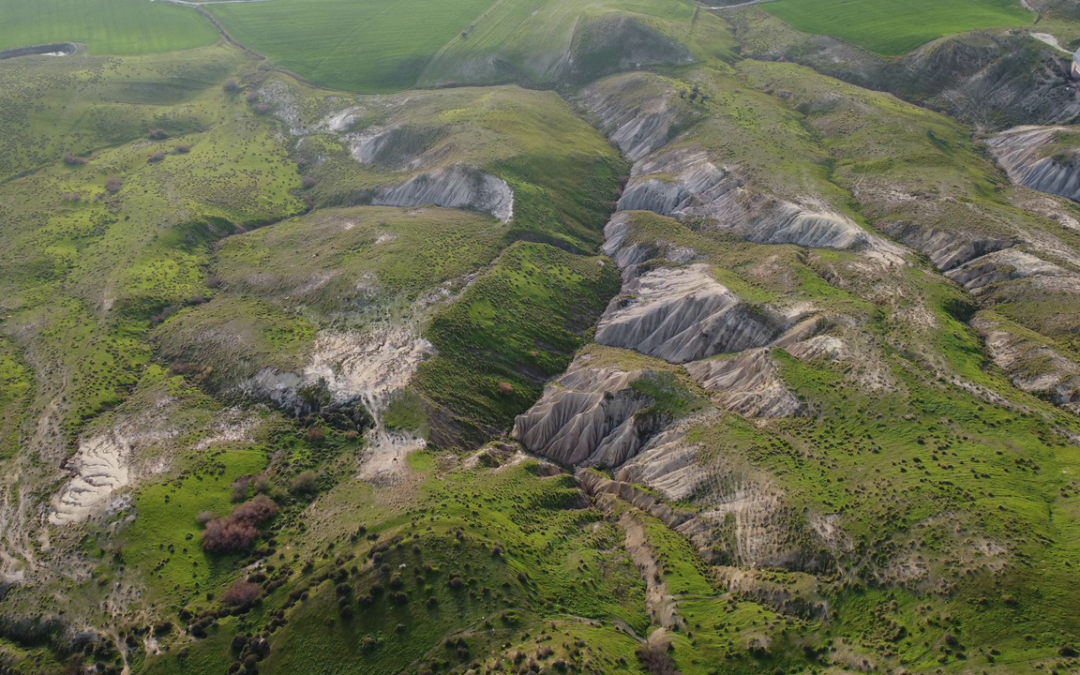
Niscemi sits on clay-rich terrain, a type of soil known for its instability when exposed to prolonged moisture. Historical records show that the area has experienced ground movement and erosion events in the past, long before Cyclone Harry.
In other words, the storm acted as a trigger, not the root cause. This distinction matters, because it explains why the event is confined to a very specific area rather than spreading across the island.
A localized event for this Sicily landslide: The rest of Sicily is safe
One of the most important points for travelers to understand is this:
The landslide is confined to Niscemi and its immediate surroundings.
Sicily is the largest island in the Mediterranean. Popular destinations such as Palermo, Catania, Taormina, Syracuse, Noto, theAeolian Islands, Agrigento, Cefalù, and western Sicily are completely unaffected.
Airports are operating normally. Train services across the island are running. Hotels, restaurants, beaches, cultural sites, and vineyards are open and welcoming visitors as usual.
Why your Sicily holiday is not at risk
If you are planning a holiday in Sicily this year, there is no reason to cancel or postpone your trip. But we imagine that you might have legitimately thought: “Is my trip to Sicily at risk”? The answer is simple. Not at all.
Tourism infrastructure remains fully operational, and travel routes commonly used by visitors do not pass through the affected area. Even within southern Sicily, disruptions are limited and clearly signposted.
In fact, Sicily has a long history of dealing with natural challenges — and doing so with resilience, organization, and a deep sense of hospitality. Visitors will experience the island exactly as they expect: rich culture, extraordinary food, dramatic landscapes, and warm human connections.
Want to help? The best way is to come to Sicily
Many readers ask how they can help when they see events like this. The answer is simple and honest:
Tourism supports local economies, families, small businesses, and communities across the island. By traveling responsibly, staying in locally owned accommodations, eating in local restaurants, and moving through the island with care, visitors contribute directly to Sicily’s recovery and long-term resilience.
Sicily is ready to welcome you.
We help you plan a smooth, responsible Sicily holiday
At Time for Sicily, we specialize in tailor-made travel planning, designed around your pace, interests, and comfort level. Whether you prefer cultural routes, coastal escapes, food-focused itineraries, or slow travel by train, we help you navigate Sicily with confidence and clarity.
Our role is to remove uncertainty, especially in moments when headlines can feel alarming without proper context.
Traveling Sicily by train: A great choice
Traveling by train in Sicily is not only possible — it’s one of the best ways to experience the island.
Rail routes connect major cities and many secondary destinations, offering scenic journeys along coastlines and through historic towns. Train travel reduces environmental impact and allows travelers to experience Sicily in a slower, more immersive way.
We are specialists in rail-based itineraries, helping you combine trains with short transfers and hand-picked stays.
Direct flights from North America
Getting to Sicily is easier than many travelers expect.
There are direct seasonal flights from New York and Montreal, and additional one-stop options via major European hubs. We help travelers choose the best routes, understand arrival airports, and connect smoothly to their final destination.
EU entry requirements for Americans and Canadians
Entry rules for Europe are evolving, and understanding them matters.
Americans and Canadians can travel visa-free for short stays, but new systems such as EES (already in place) and ETIAS (expected in late 2026) are changing border procedures. We explain clearly what applies to you, what you need to prepare, and how to avoid surprises at the border.
A final word
The landslide in Niscemi is serious for the people directly affected, and Sicily is responding with the same resilience and solidarity it has shown throughout its history.
At the same time, Sicily remains open, safe, and ready to welcome travelers. Understanding the context allows you to travel with confidence — and to be part of the island’s ongoing story.
If you are considering a trip to Sicily and want guidance rooted in local knowledge and real-world conditions, we are here to help.
—
Photo Credits: “Calanchi di Niscemi” by F.Conti90 under Creative Commons Attribution-ShareAlike 4.0 International licence