

Palermo does not do polite food. It does loud, messy, magnificent food. The kind that drips down your wrist, stains your shirt, and makes you wonder why you ever bothered with a tablecloth.
This is a city where street food is not a trend. It is a tradition that stretches back centuries, shaped by Arab, Norman, Spanish and Greek influences that left their fingerprints on every recipe. The result is one of the most exciting and underrated street food scenes in all of Europe and this Palermo street food guide will show you exactly where to find it.
If you are visiting Sicily and landing in its capital, this is everything you need to know about eating your way through Palermo’s streets, markets and hidden corners.
Why Palermo is the street food capital of Italy
Rome has its supplì. Naples has its pizza. But Palermo has something different entirely: a street food culture so deeply embedded in daily life that locals eat standing up at market stalls for lunch as naturally as sitting down in a restaurant for dinner.
The reason is historical. Palermo sits at the crossroads of the Mediterranean. For over two thousand years, every civilisation that conquered Sicily left behind ingredients, techniques and recipes. The Arabs brought spices, rice and sugar. The Spanish introduced tomatoes and peppers from the New World. The Normans brought a taste for rich, layered flavours. The result is a cuisine unlike anything else in Italy.
Today, Palermo is part of a UNESCO World Heritage route celebrating Arab-Norman architecture, and its food is an inseparable part of that cultural story.
The essential Palermo street food dishes
Arancine: the golden rice balls
No Palermo street food guide would be complete without arancine. These deep-fried rice balls, golden and crunchy on the outside, soft and flavourful inside, are Sicily’s most iconic snack. In Palermo they are called arancine (feminine, round), not arancini as in eastern Sicily (masculine, cone-shaped). Do not make this mistake in front of a Palermitano.
The classic filling is ragù: slow-cooked meat sauce with peas and a heart of melted mozzarella. But you will also find versions stuffed with pistachio cream, butter and ham (arancina al burro), or spinach and ricotta. Each one is a meal in itself.
Where to try them: Ke Palle in Via Maqueda serves some of the best in the city or you can try Sfrigola Palermo in C.so Calatafimi. For a more traditional experience, head to any friggitoria near Ballarò market.
Panelle: chickpea fritters from the Arab era
Panelle are thin, crispy chickpea flour fritters that trace their origins directly back to the Arab rule of Sicily in the 9th and 10th centuries. They are typically served inside a soft sesame roll called mafalda, creating a sandwich that is entirely carbs, entirely delicious and entirely Palermo.
The best panelle are paper-thin, lightly salted and eaten immediately. A squeeze of lemon on top is traditional. Paired with crocchè (potato croquettes), this is the classic Palermo street lunch.
Where to try them: Franco U Vastiddaru in Via Vittorio Emanuele is legendary. Also Antica Focacceria San Francesco in Plazza San Francesco.
The queue tells you everything you need to know.
Sfincione: Palermo’s original pizza
Before pizza as the world knows it, Palermo had sfincione. This thick, spongy flatbread is topped with a rich tomato and onion sauce, anchovy, caciocavallo cheese and a generous layer of seasoned breadcrumbs. It is sold from carts and bakeries across the city, usually in thick, generous squares.
Sfincione is particularly popular on Saturday mornings and during the feast of the Immacolata in December, but you can find it year-round in Palermo’s bakeries and market stalls.
Pane con la milza: the sandwich that divides opinion
This is the dish that separates the curious travellers from the cautious ones. Pane con la milza (bread with spleen) is a sandwich filled with chopped veal spleen and lung, fried in lard and served either schietta (plain, with just a squeeze of lemon) or maritata (married, with ricotta and caciocavallo cheese melted on top).
It sounds challenging. It tastes extraordinary. This is a sandwich with roots in the Jewish community of Palermo, dating back centuries. It is history on a plate.
Where to try it: Nni Franco U Vastiddaru at the Vucciria market, or the legendary cart near Piazza Marina.
Stigghiola: grilled lamb intestines
If pane con la milza did not test your adventurous spirit, stigghiola will. These are lamb (or goat) intestines, wrapped around spring onions and grilled over charcoal until crispy and smoky. The smell is intoxicating.
Stigghiola is pure Palermo. You find it at street-side grills, usually in the markets or along the edges of old Palermo’s narrow streets. Eat it standing up, with your hands, and wash it down with a cold beer.
Cannoli: the king of Sicilian desserts
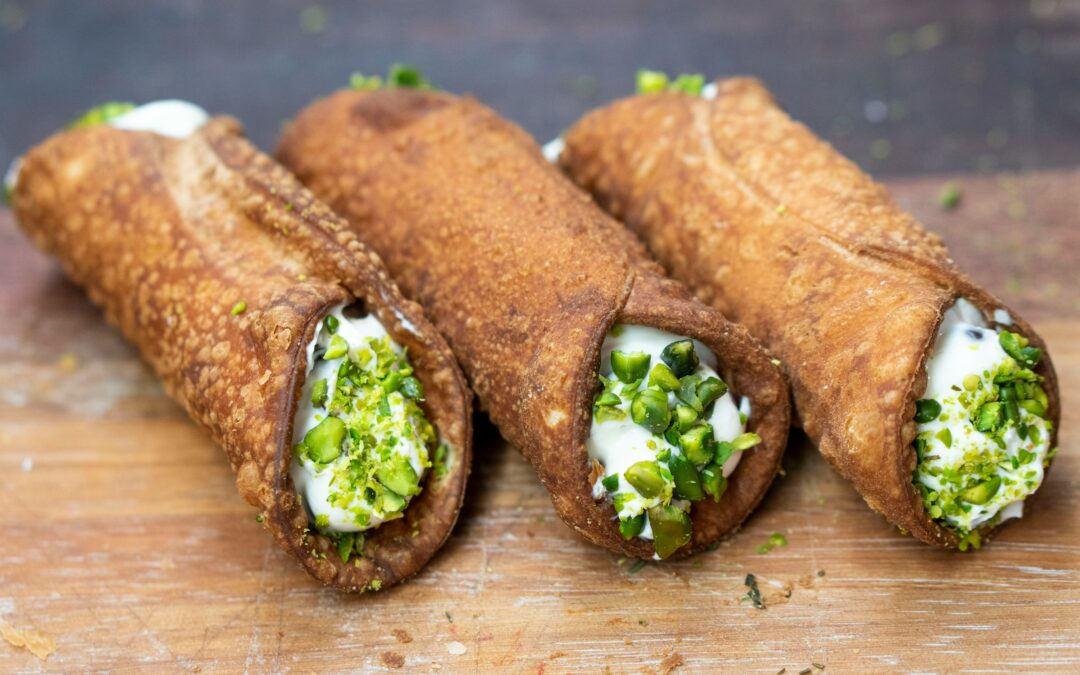
A true Sicilian cannolo is nothing like the stale, pre-filled versions found elsewhere. In Palermo, a cannolo is filled to order. The shell is shattered-crisp, the ricotta filling is fresh, sweet and impossibly light, and the ends are studded with pistachios from Bronte or candied orange peel.
The secret: if it is not filled in front of you, walk away.
Where to try them: Pasticceria Cappello on Via Colonna Rotta, or Antico Caffè Spinnato.
The three great markets of Palermo
Palermo’s markets are the beating heart of the city’s food culture. Three markets in particular are essential.
Ballarò: the oldest and most authentic
Ballarò is Palermo’s oldest market, dating back to the Arab period. It stretches through a maze of narrow streets in the Albergheria neighbourhood and remains the most authentically local. Here you will find fishmongers shouting prices, elderly women selecting vegetables with surgical precision, and vendors frying panelle in enormous vats of oil. Ballarò is also the best market for street food. Follow the smoke, follow the noise, and eat everything.
Vucciria: the historic heart
The Vucciria was once the most famous market in Palermo, immortalised by the painter Renato Guttuso. Today in the evening it transforms into one of the most vibrant outdoor eating and drinking scenes in the city.
Capo: the local favourite
The Capo market runs along Via Porta Carini and is particularly popular with Palermitani who want to shop without tourist crowds. The fruit and vegetable displays are magnificent, the fish section is superb, and the friggitorie here produce some of the finest panelle and crocchè in Palermo.
When to eat street food in Palermo
Markets are busiest in the morning (roughly 8am to 1pm), the best time for the freshest fried food. Stalls selling arancine, panelle and sfincione operate throughout the day. In the evening, the Vucciria area comes alive from around 7pm onwards.
If you are visiting in Spring, the markets are particularly wonderful: the produce is extraordinary and the crowds are manageable.
Beyond street food: the full Palermo experience
Palermo’s street food is extraordinary, but it is only one layer of a city that rewards exploration. The Norman Palace and its breathtaking Cappella Palatina, the catacombs of the Capuchin monastery are all of it deserves your time.
And when you have walked enough, find a street stall, order an arancina and a cold beer, and remember that this is exactly what Palermo has been doing for a thousand years.
Plan your Palermo food adventure
Ready to taste Palermo for yourself? Whether you need help with a full Sicily travel concierge service or simply want to talk to a local expert, our team is here to help.
Book a consultation and we will build a trip around the food, the culture and the experiences that make Sicily unlike anywhere else on earth.
Photo: Unsplash