

There are food festivals all over the world. Most of them are forgettable.
Cous Cous Fest Sicily is not. Every September, the small fishing village of San Vito Lo Capo (on the northwestern tip of Sicily) transforms into one of the most extraordinary celebrations of food, culture and human connection anywhere in the Mediterranean.
For ten days, the world’s best couscous chefs compete on a stage by the sea. The beach fills with music, the air smells of spice and slow-cooked broth, and the streets overflow with people who have travelled from across the globe for one of Italy’s most unique food events.
This guide tells you everything you need to know: what happens, when to go, how to get there and how to make the most of every day.
What is Cous Cous Fest?
Cous Cous Fest is an international food and culture festival held annually in San Vito Lo Capo, a small coastal town on the northwestern tip of Sicily. It takes place every September and has been running since 1998.
The festival centres on a couscous cooking competition in which chefs from countries across the Mediterranean, Africa and beyond compete for the title of world’s best couscous. Each team cooks according to their own national tradition, using different grains, broths, spices and techniques, and a jury of food professionals judges the results.
However, Cous Cous Fest is far more than a cooking competition. It is a celebration of Mediterranean culture in the broadest sense, a festival of music, dance, storytelling and shared meals that reflects the long history of exchange between the civilisations that surround this sea.
The choice of San Vito Lo Capo as the location is not accidental. Sicily sits at the crossroads of the Mediterranean. For more than two thousand years, Arab, Norman, Greek and Spanish cultures have all left their mark on this island, and couscous itself arrived in Sicily through Arab influence during the ninth and tenth centuries. In this corner of northwestern Sicily, couscous is not a foreign dish. It is part of the local culinary identity, cooked with fish broth in a style found nowhere else in Italy.
Where is San Vito Lo Capo?
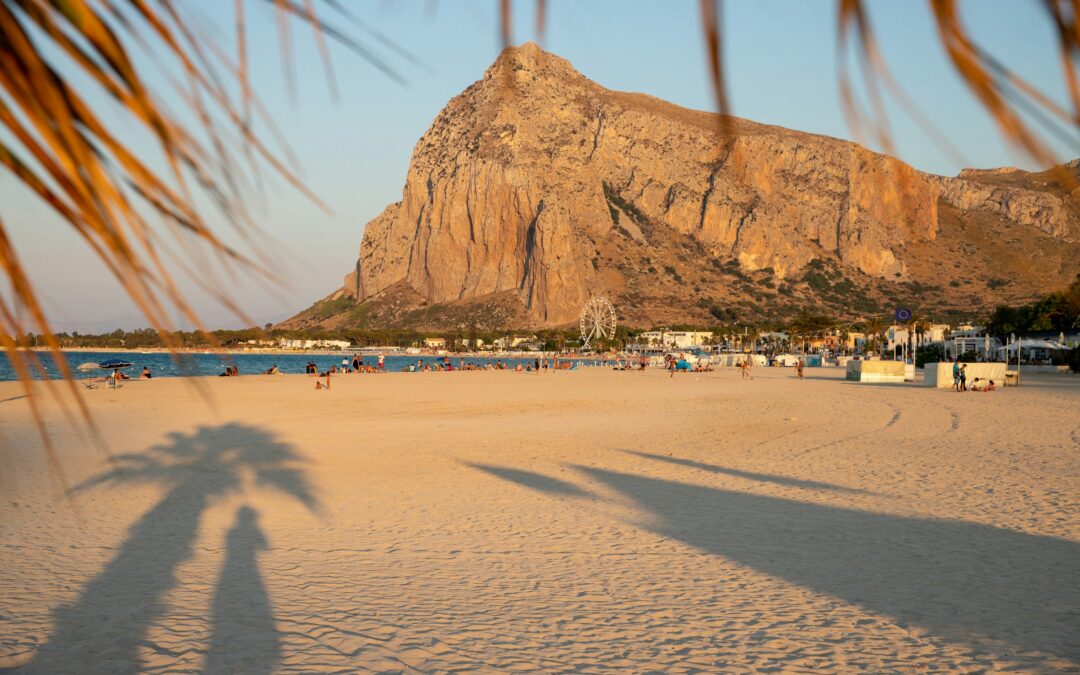
San Vito lo Capo is a small town of approximately four thousand inhabitants on the Golfo di Castellammare, at the far northwestern tip of Sicily. It sits beneath the dramatic white limestone cliffs of Monte Monaco and faces one of the finest beaches in the entire Mediterranean, a long arc of white sand and turquoise water that consistently ranks among the best beaches in Italy.
The town itself is small, relaxed and genuinely beautiful. Outside of festival season, it is a quiet fishing and holiday destination known for its extraordinary beach and its local couscous tradition. During Cous Cous Fest, it becomes one of the most vibrant places in Sicily.
San Vito Lo Capo is approximately 45 kilometres northwest of Trapani and around 100 kilometres west of Palermo. It is not on the main tourist circuit, which is precisely part of its charm. If you want to explore more of this extraordinary corner of Sicily, our guide to the best beaches in Sicily covers the coastline of the northwest in detail.
When does Cous Cous Fest take place?
Cous Cous Fest Sicily takes place every year in late September. The festival runs for approximately ten days and typically ends on the last weekend of the month.
September is, in our honest opinion, one of the best times to visit Sicily. The summer crowds have thinned. The sea is still warm enough for swimming. The light is extraordinary, softer and more golden than in July and August. Furthermore, the September harvest brings some of the finest produce of the year to the markets and restaurants of the island.
If you are planning a broader Sicily trip around the festival, book a free call with our team to find out if September is the perfect moment for you to visit Sicily.
What happens at Cous Cous Fest?
The festival programme is built around several main elements.
The international cooking competition
The heart of Cous Cous Fest is the cooking competition, in which national teams from across the Mediterranean and beyond prepare their couscous on a purpose-built stage by the sea. Teams typically represent countries including Morocco, Tunisia, Algeria, Senegal, Israel, Palestine, Turkey and of course Italy, with the Sicilian team cooking the local fish couscous that has been a tradition in this part of the island for centuries.
Each team cooks according to their national tradition. The differences are remarkable, in the grain used, the method of steaming, the broth, the spices and the accompaniments. A jury of food professionals tastes and judges each dish over several days before announcing the winner at the final ceremony.
The free tasting sessions
Alongside the competition, Cous Cous Fest offers free tasting sessions on the beach in which visitors can sample couscous from each participating country. This is one of the most popular elements of the festival, and one of the most extraordinary food experiences in Sicily. In a single afternoon, you can taste a dozen different couscous traditions, each one a window into a different culinary culture.
The music programme
Every evening during the festival, live music fills the main stage and the streets of San Vito Lo Capo. The programme reflects the international spirit of the event, with performers from across Africa, the Middle East and the Mediterranean. Moreover, the setting is extraordinary: a small Sicilian fishing village by the sea, under a September sky, with the smell of couscous in the air.
Cooking workshops and cultural events
Throughout the festival, cooking workshops and cultural events take place across the town. These include demonstrations by the competing chefs, talks on Mediterranean food culture and hands-on sessions in which visitors can learn to make couscous in different styles. If you are passionate about Sicilian food culture, our complete guide to what to eat in Sicily gives the full context for understanding where couscous fits within the island’s extraordinary culinary tradition.
Sicilian fish couscous: a tradition unlike any other
One of the most important things to understand about Cous Cous Fest is that couscous in this part of Sicily is not an imported dish. It is a local tradition with roots going back more than a thousand years.
The Arab presence in Sicily between the ninth and eleventh centuries left a profound mark on the island’s food culture, in the use of saffron, cinnamon, raisins and pine nuts in savoury dishes, in the tradition of sweet pastries, and in the introduction of couscous to the western tip of the island. In the area around Trapani and San Vito Lo Capo, couscous with fish broth (known locally as cuscusu) has been cooked continuously ever since.
The Sicilian version is distinct from North African couscous in several ways. It uses a fish broth rather than meat, typically made with scorpionfish, sea bass and other local catch. The grain is hand-rolled and steamed in a traditional clay pot called a cuscussiera. The result is lighter and more delicate than its North African cousins, and completely extraordinary.
This is the dish that gave Cous Cous Fest its reason to exist. Tasting the local version in San Vito Lo Capo, in the town where this tradition has been alive for a thousand years, is one of the most memorable food experiences in all of Sicily.
How to get to San Vito Lo Capo
By air
The closest airport is Palermo Falcone-Borsellino, approximately 100 kilometres east of San Vito Lo Capo. Direct connections are available from London, New York, Toronto and most major European cities. From Palermo, the drive to San Vito Lo Capo takes approximately one hour and thirty minutes.
Alternatively, Trapani Birgi airport is just 45 kilometres south, a significantly shorter journey. However, it has fewer international connections than Palermo and is worth checking based on your point of departure.
By car
The most practical way to reach San Vito Lo Capo is by car. The drive from Palermo is straightforward and passes through some of the most beautiful landscape in northwestern Sicily, the salt pans of Trapani, the vineyards of the Marsala coast and the dramatic limestone cliffs of the Zingaro Nature Reserve. Our guide to renting a car in Sicily covers everything you need to know about driving on the island.
By public transport
San Vito Lo Capo is served by bus connections from Trapani throughout the year. During Cous Cous Fest, additional services are typically added to accommodate the festival crowds. The journey from Trapani takes approximately one hour.
Where to stay during Cous Cous Fest
San Vito Lo Capo has a good range of accommodation, from small family-run bed and breakfasts in the town centre to larger hotels along the beachfront. However, the town fills quickly during festival week and booking well in advance is essential.
The best advice is to book your accommodation as soon as the festival dates are announced (typically in the spring of each year). Staying in the town itself is strongly preferable to staying in Trapani and driving in each day. The evening atmosphere in San Vito Lo Capo during the festival is extraordinary, and you will want to be part of it.
Cous Cous Fest and the wider region
Using San Vito Lo Capo as a base during Cous Cous Fest gives you access to one of the most beautiful and least visited corners of Sicily.
The Zingaro Nature Reserve (Sicily’s first nature reserve, established in 1981) begins just a few kilometres south of San Vito Lo Capo. Its coastline of hidden coves, crystal-clear water and dramatic cliffs is among the most beautiful in the entire Mediterranean. A morning walk along the coastal path, followed by an afternoon at the festival, makes for a near-perfect September day in Sicily.
The salt pans of Trapani, a short drive south, are one of the most atmospheric landscapes in Sicily, a flat, shimmering world of windmills and pink water that glows in the late afternoon light. Furthermore, Erice (the medieval hilltop town above Trapani) is one of the finest small towns in Sicily, with extraordinary views across the western coast and a pastry tradition that is among the best on the island.
For a broader picture of how to combine Cous Cous Fest with the rest of western Sicily, our tailor-made Sicily itinerary service can help you build the perfect trip.
Why Cous Cous Fest matters
Food festivals come and go. Cous Cous Fest Sicily has been running for more than twenty-five years because it stands for something beyond the food itself.
In a world that increasingly emphasises division, this festival celebrates the opposite, the idea that the civilisations of the Mediterranean have always learned from each other, borrowed from each other and eaten at each other’s tables. Couscous arrived in Sicily from North Africa a thousand years ago. Today, it sits at the centre of a festival that brings together chefs and visitors from dozens of countries every September.
According to Slow Food, the international food culture organisation that has supported the festival, events like Cous Cous Fest represent “the best of what food culture can do, bringing people together across borders through the universal language of a shared meal.”
It is, in our honest opinion, one of the most genuinely moving food experiences in Italy. Not just because the couscous is extraordinary (though it is) but because of what it represents.
Come hungry. Leave with a different understanding of what Sicily is.
Conclusion
Cous Cous Fest Sicily is the kind of event that surprises people who think they already know what a food festival looks like.
It is too serious to be a tourist attraction, yet too joyful to feel like a competition. Too rooted in local tradition to feel exotic, yet too international to feel parochial. On the other hand, it is exactly the kind of event where a single afternoon tasting couscous on a beach turns into an evening of music, and an evening turns into a decision to come back next year.
Book early. Arrive hungry. Walk slowly through the town in the evening.
You will understand immediately why people keep coming back to Cous Cous Fest Sicily.
Photo: Unsplash